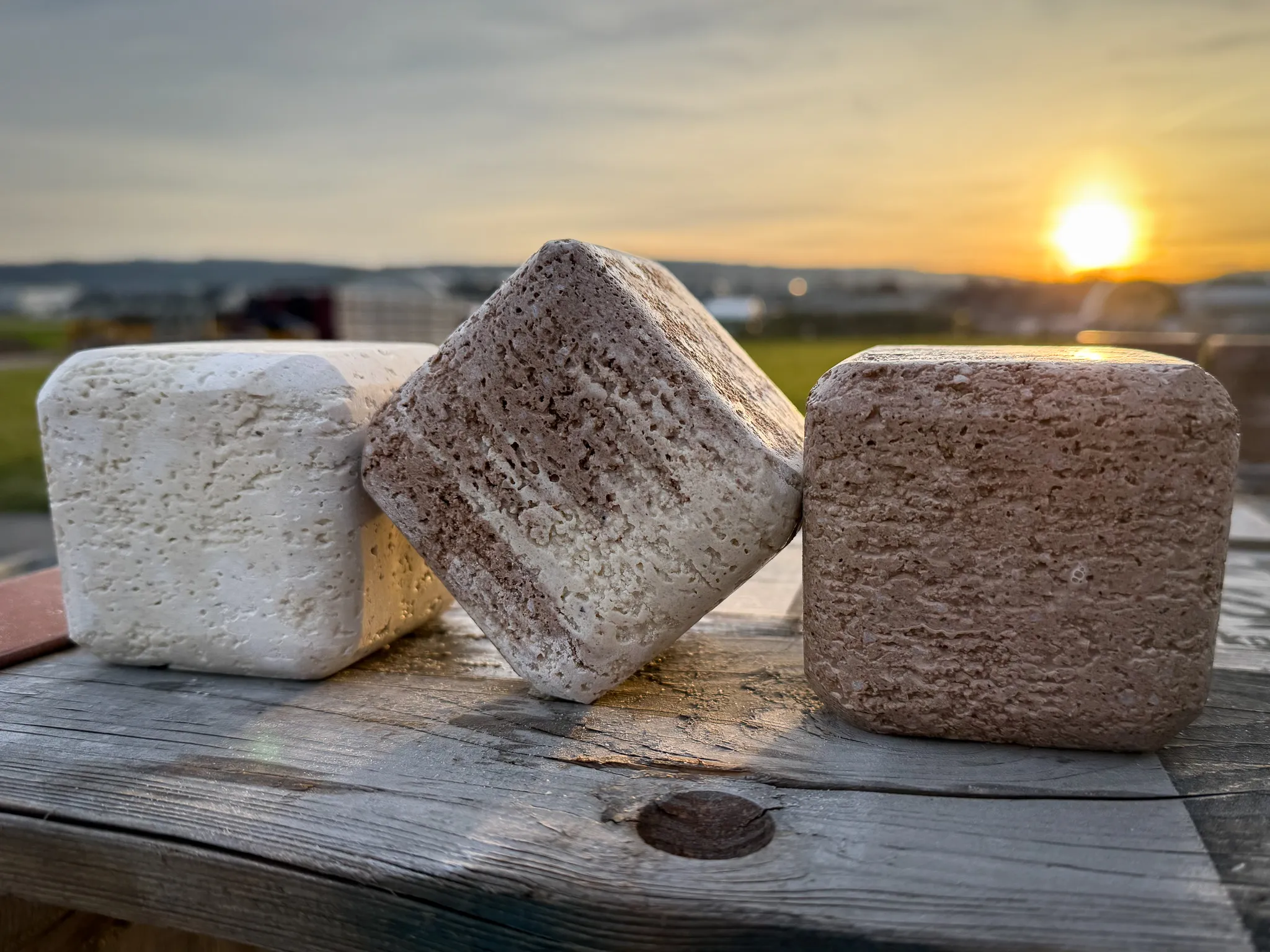
Materials
Stone from what’s already there
We can print with any mineral resources: quarry fines, cutting sludge, crushed brick, demolition concrete. Each one brings its own colour and grain.
What we have printed so far
- 01
Marble
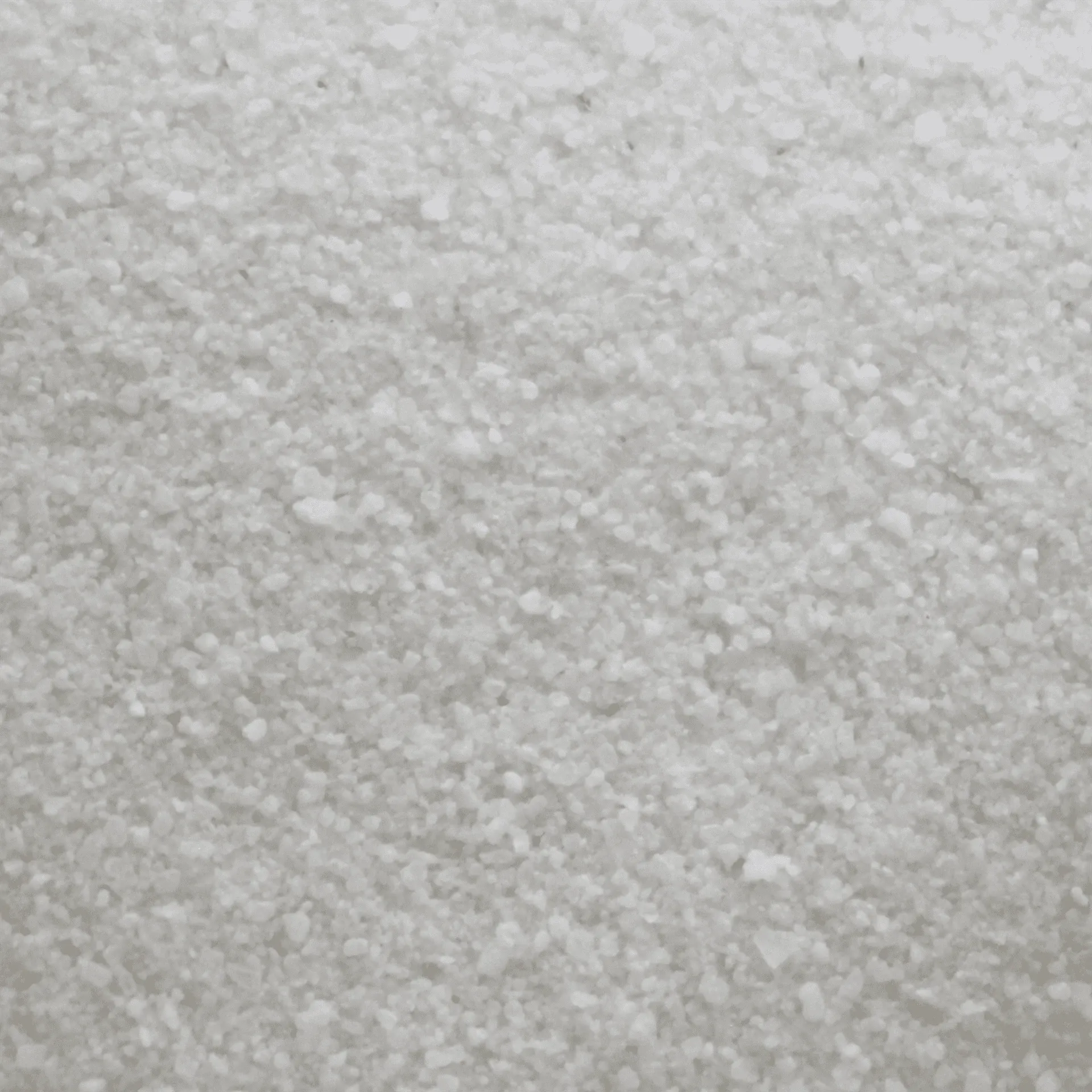
A fine, bright stone with an even grain. Takes a polish well.
- 02
Granite
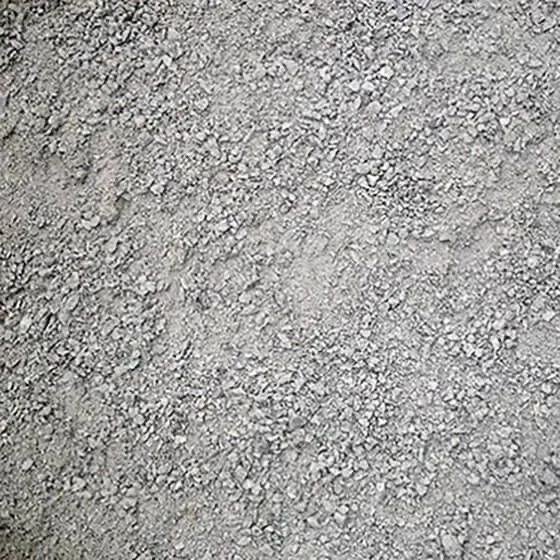
A speckled grey stone with a coarser grain.
- 03
Sandstone
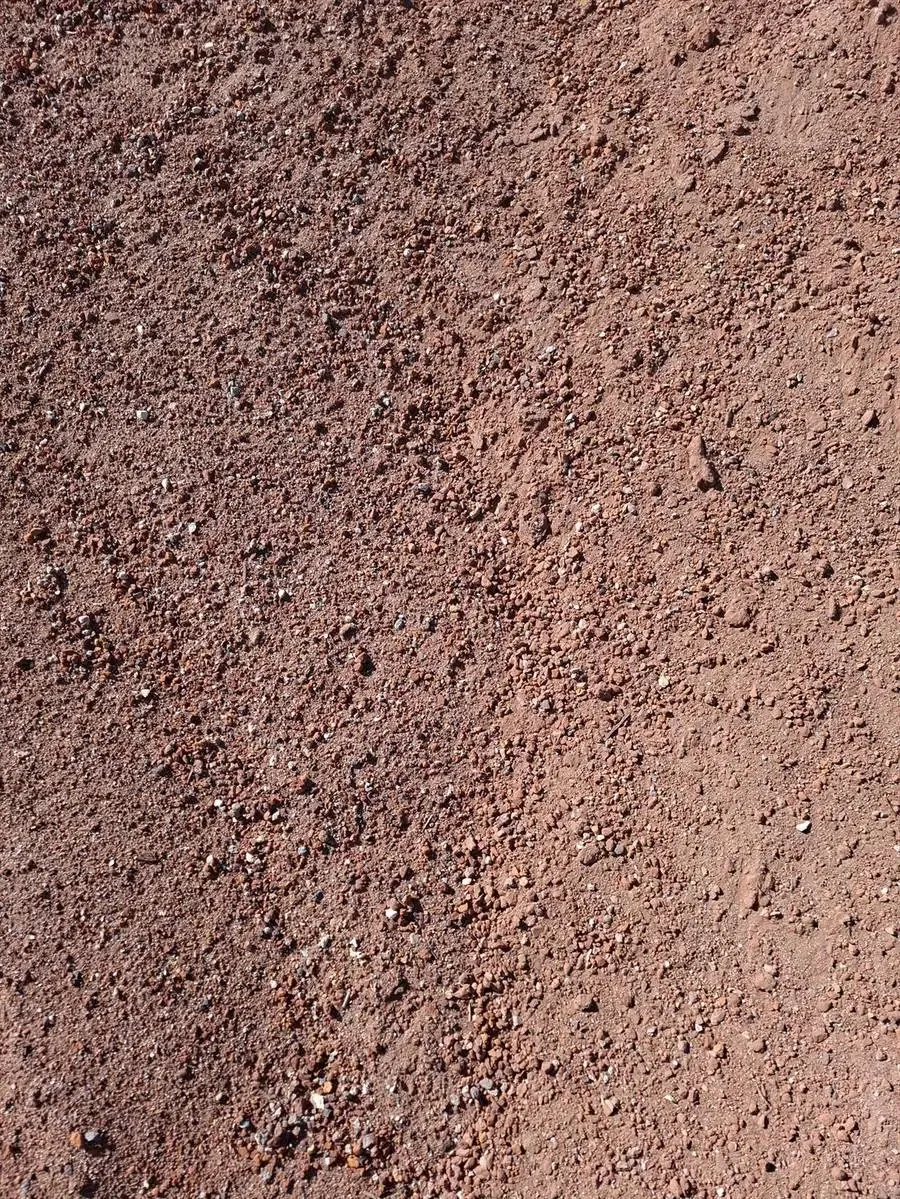
A warm, matte stone with a soft, sandy texture.
- 04
Brick dust
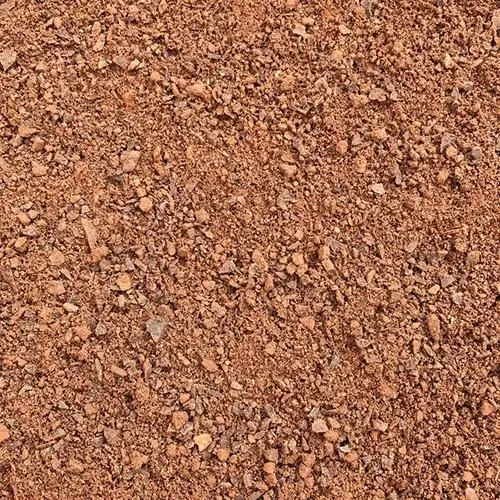
A warm terracotta tone, from fired clay.
- 05
Recycled concrete
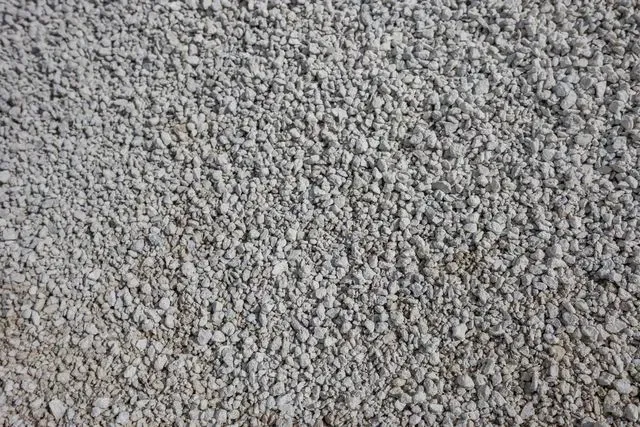
A neutral grey with visible aggregate, from demolished buildings.
- +
Your material?
Send us a sample of your quarry or demolition residue →
Mix design
A recipe for every sand
No two sands are alike. Grain size, shape, colour and chemistry change from one quarry or demolition site to the next.
Our own mix-design software works out the recipe for each one: which grain sizes, in what proportions, with which binder. That is how we print with anything from fine sand to gravel of 8 mm.
- Fine sand0.063–0.2 mm
- Medium sand0.2–0.63 mm
- Coarse sand0.63–2 mm
- Fine gravel2–6.3 mm
- Gravelup to 8 mm
Drawn grains, at true relative size. Size classes after ISO 14688.
Performance
Strong enough to build with
Thanks to almost 9 years of research at ETH Zurich, we have reached the compressive strength of common structural materials.
- 37 MPa
- Mean compressive strength, in an independent accredited test
- No loss
- of strength after freeze–thaw testing
- Fire resistant
- Non-combustible and insulating, with no resin and no cement
Already built
Made from what was left
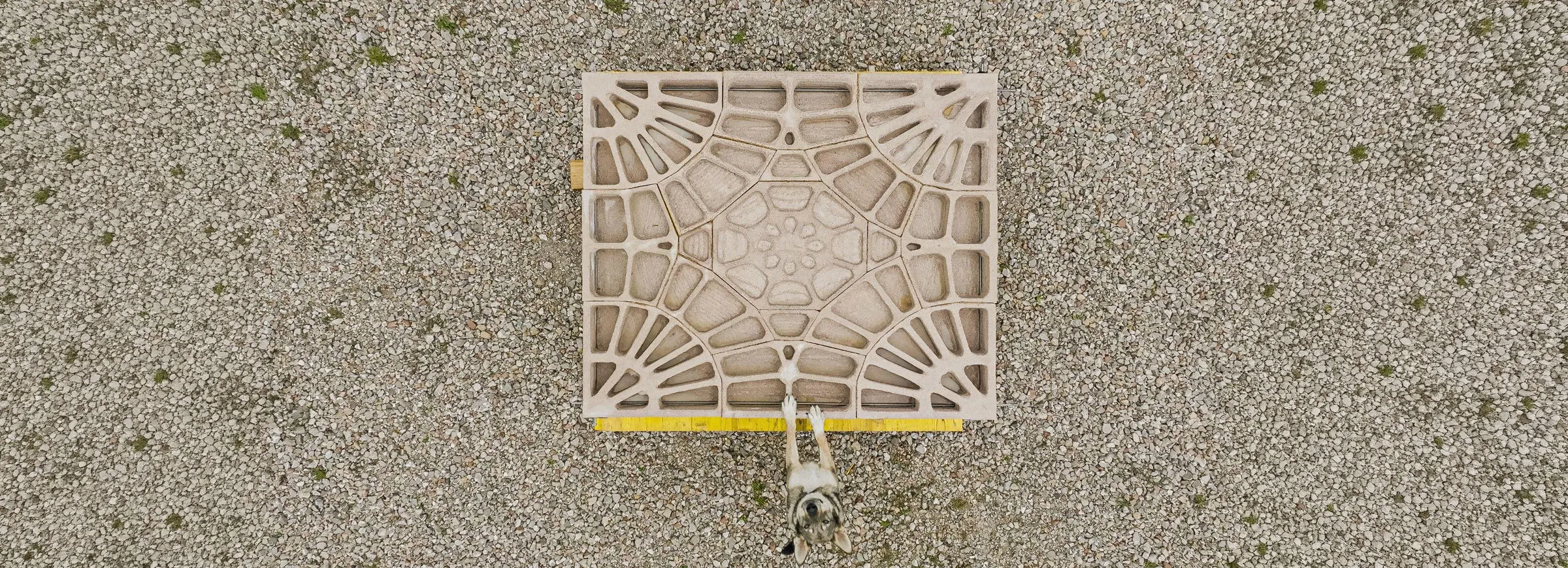 Arzo – Funicular floor prototypeArzo, Ticino · Palazzo Mora, Venice · 2023Marble fines from the Cava di Arzo, printed inside the quarry into a floor of 17 elements.
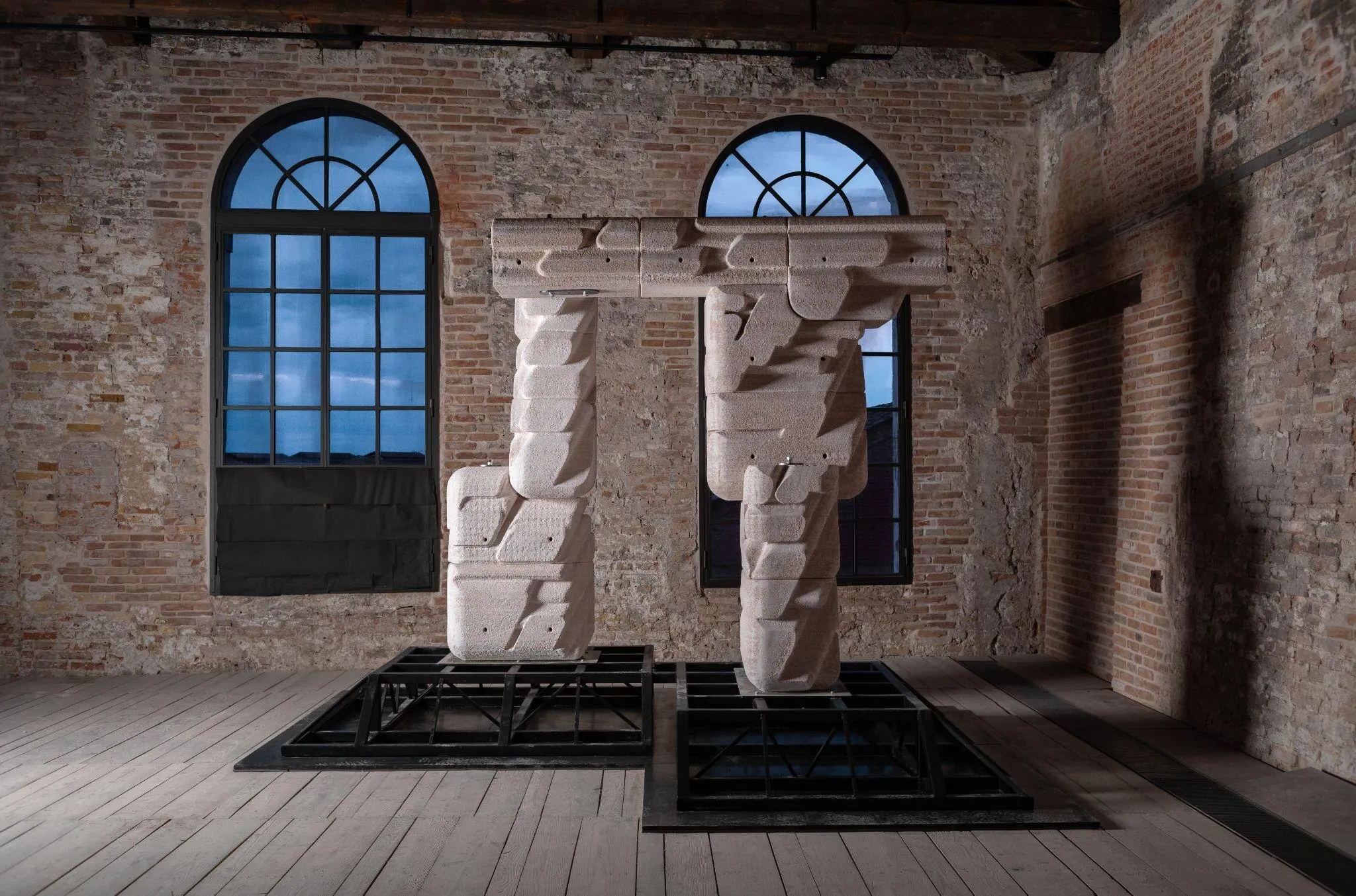 Anti-RuinVenice, Biennale Architettura · 2025A post-tensioned portal of printed stone elements, dry-stacked without mortar and demountable.
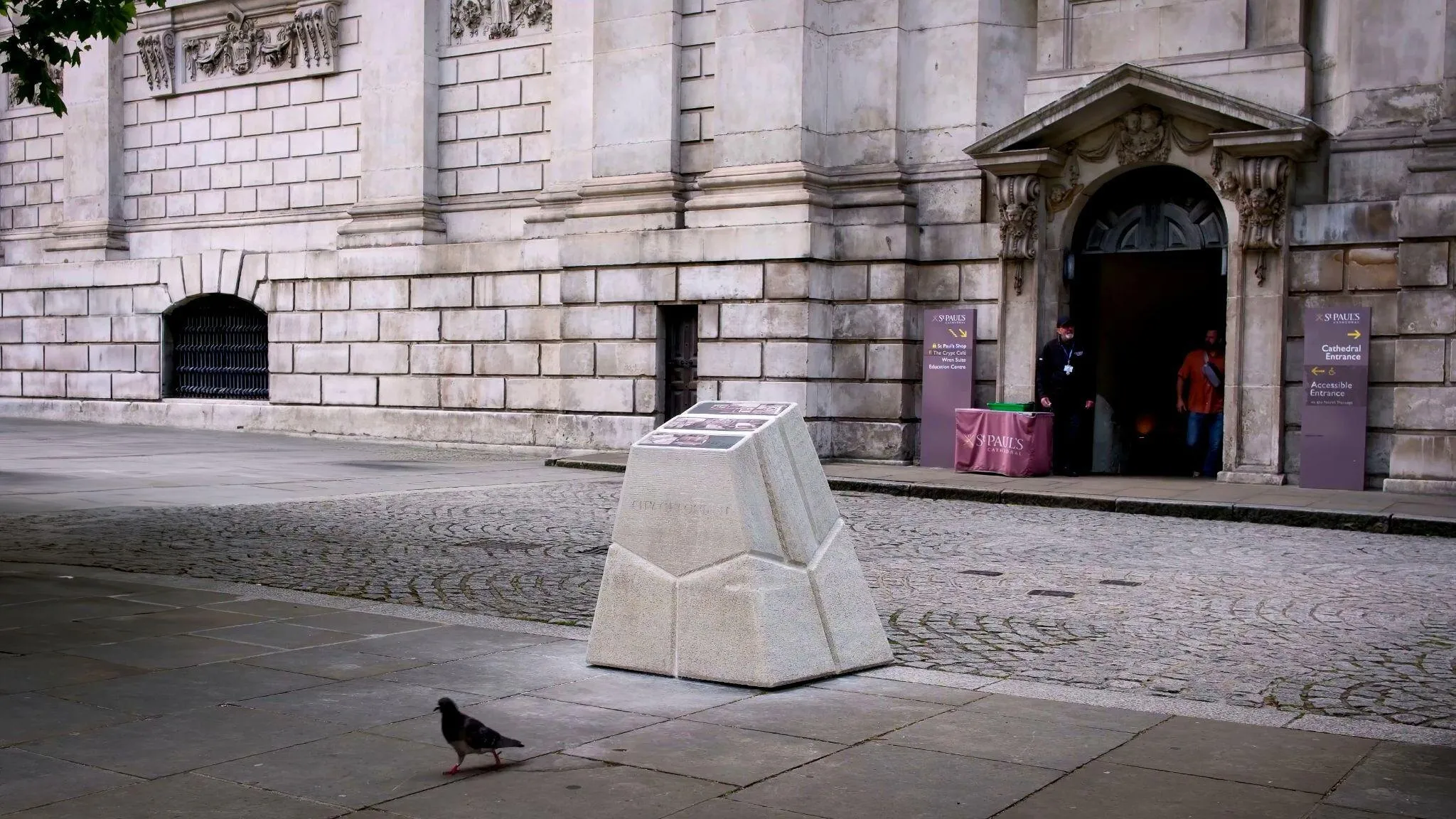 From Thames to EternityLondon, St Paul’s Cathedral · 2026A permanent outdoor piece in front of St Paul’s — printed stone exposed to London weather year-round.
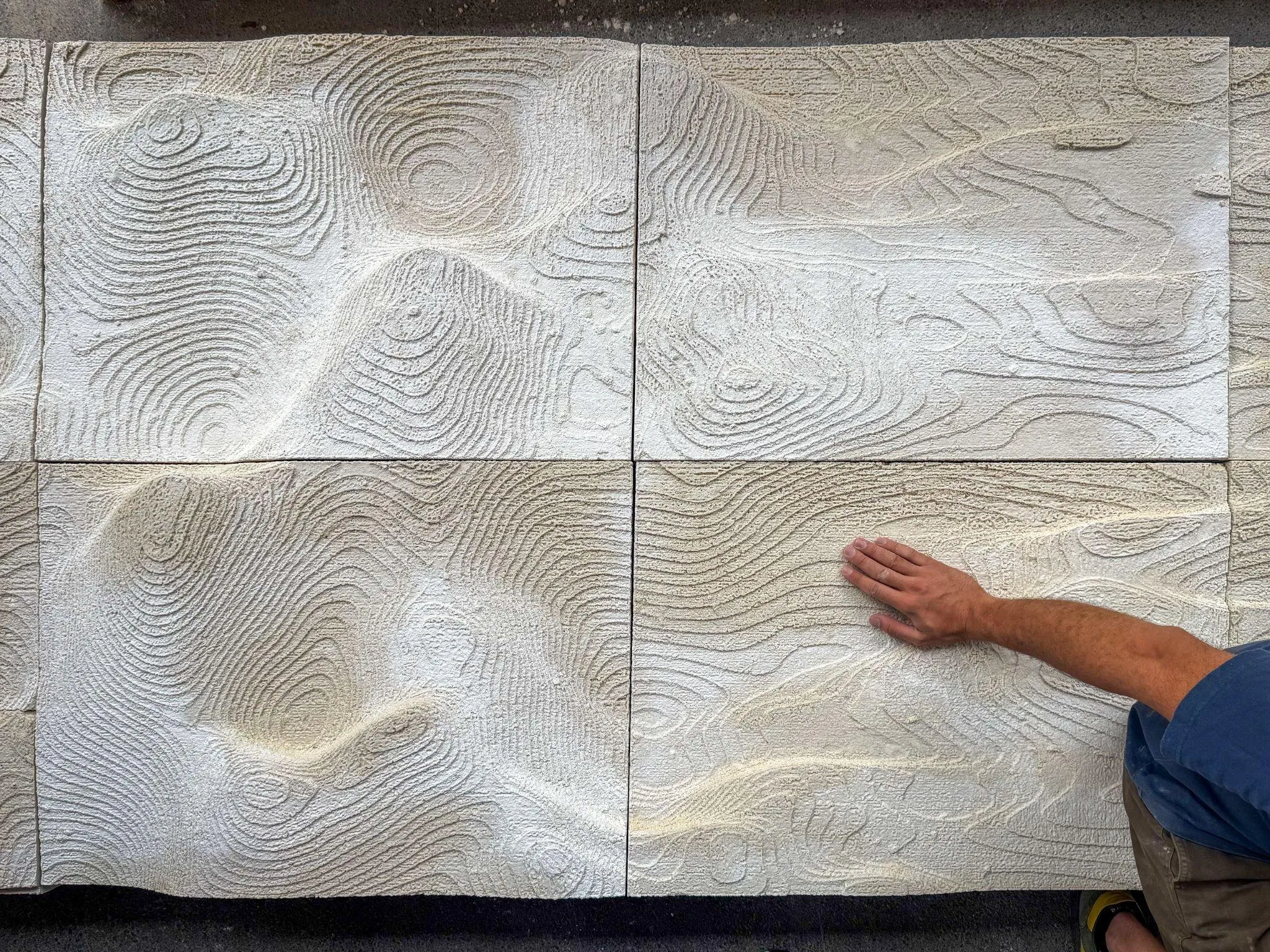 StoneXNew Delhi, India · 2026A 5 × 2.4 m relief wall in 24 printed panels, tracing stone’s route from quarry to building, for StoneX in New Delhi.
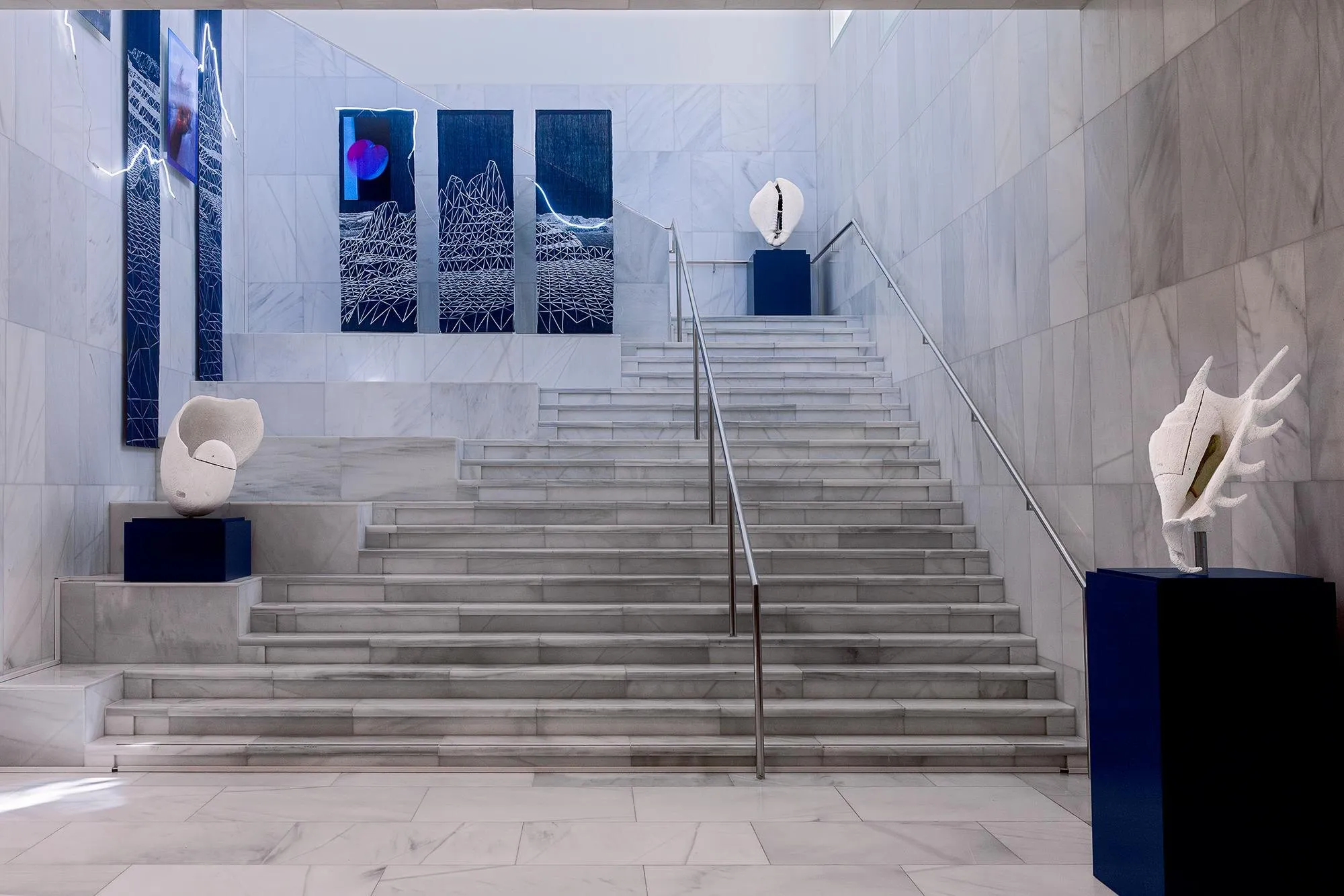 1,311 DiamondsApeldoorn, Paleis Het Loo · 2026Three seashells printed in marble dust, each housing a loudspeaker, for Caitlin Berrigan’s installation at Paleis Het Loo.
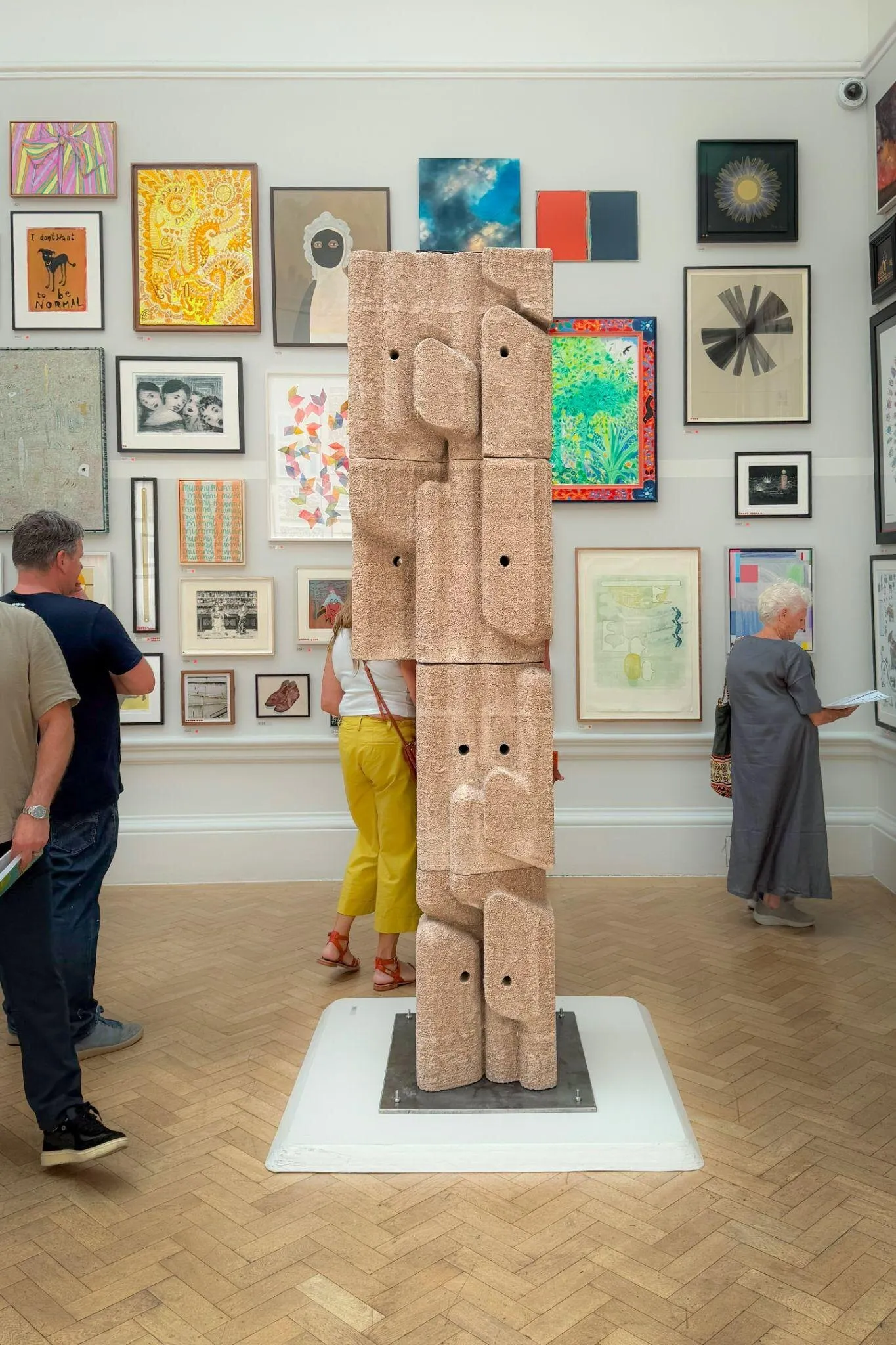 Anti-Ruin, Phase 2London, Royal Academy of Arts · 2026A 2.4 m column of four printed blocks, built to stand alone and later to join the Venice structure as a new slab.
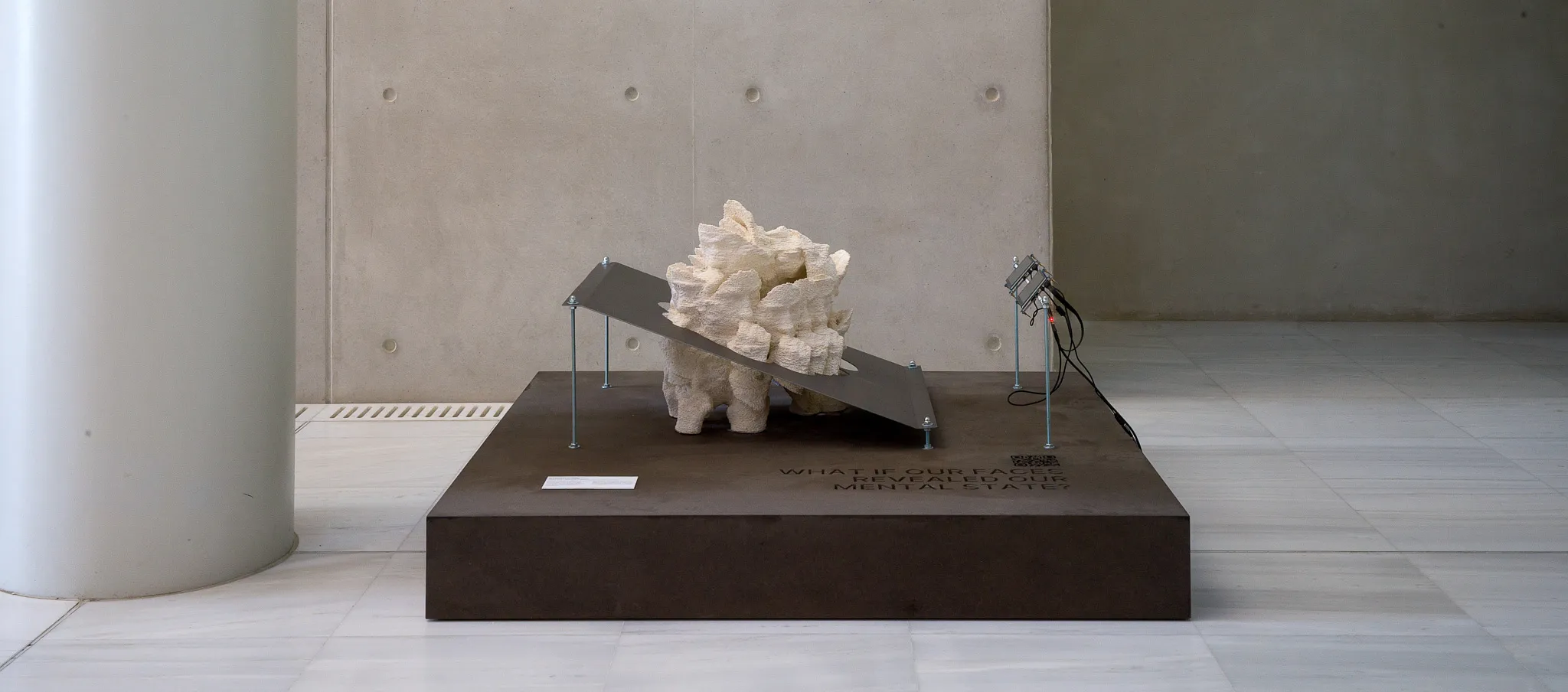 Artefacts of the FutureAthens, Stavros Niarchos Foundation · 2026Two printed stone objects by Levent Ozruh and Erzë Dinarama for an ETH Zürich exhibition on ethics in medicine at SNF Nostos 2026, Athens.
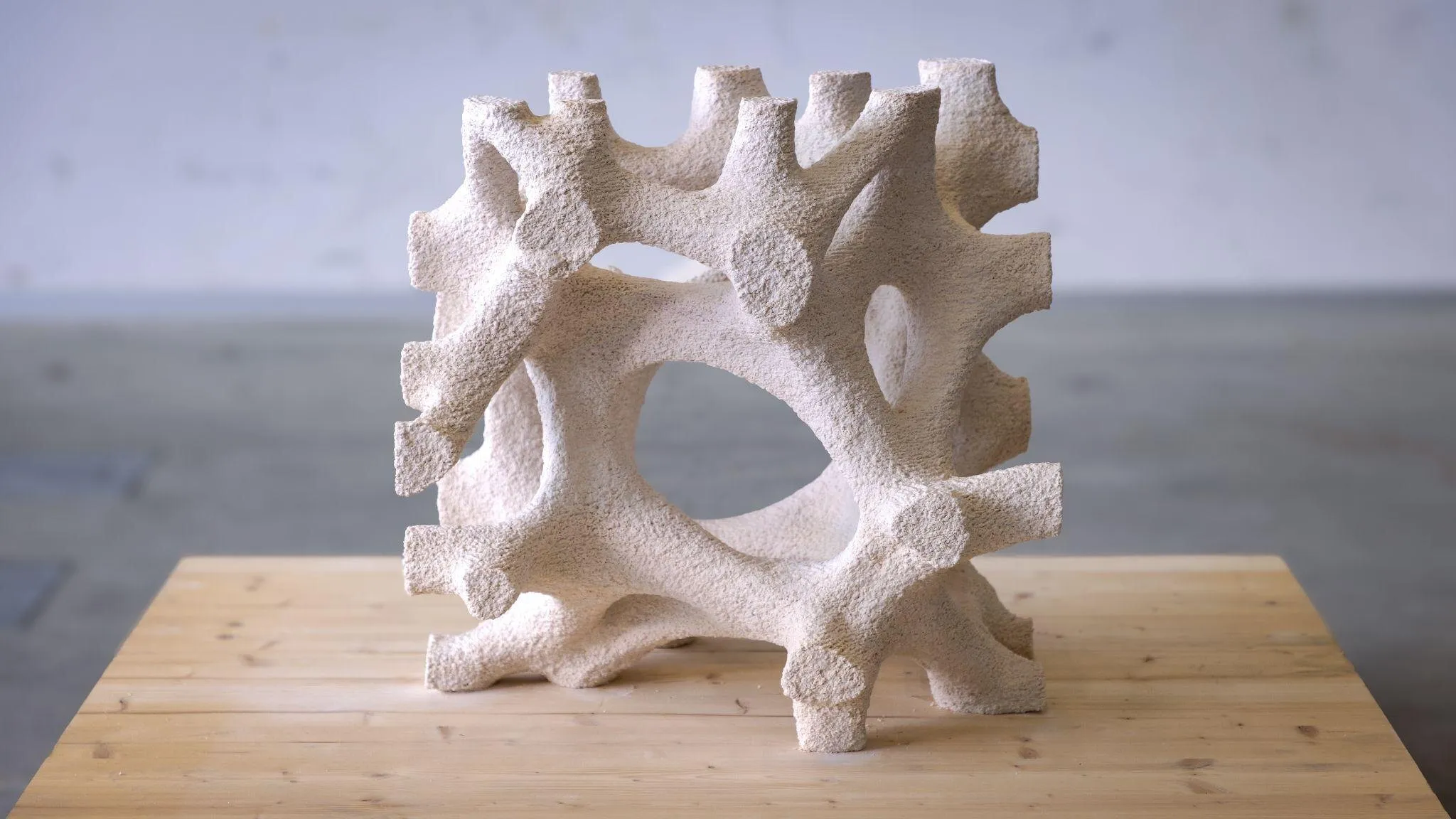 Ceci n’est pas un fossileVerona, Marmomac · 2024The bone-like lattice of Particle-Trail, printed in stone for Marmomac 2024 with Alessandro Premier, University of Auckland.
Circularity
Stone in, stone out
What a quarry or a demolition site leaves behind becomes stone. And if a printed piece is no longer needed, it can go back into the printer.
Sand
Metakaolin
Activator
- MIXTuned on the streamA recipe for each sand, bound by metakaolin instead of cement.
- PRINTBound only where neededBinder only where the part is. No moulds and efficient.↺ Loose powder, sieved, reused
- USEIndoors or outdoors, for decadesBuilt to last outdoors, with no loss of strength after freeze–thaw.
- RECYCLEMono-material, back to sandMineral only, with no resin or plastic to separate. Crushed, it is sand for the next print.↺ Back to the mix
~80%of the mix is recylced
- No cement, no kiln
- Cured at room temperature. Nothing is fired.
- Made with local materials
- We can use material from local quarries or the demolition sites.
- Monomaterial
- Made of simple, natural stone, that can be crushed and reused without treatments.
Have a material of your own?
Send us a sample of your quarry or demolition residue. We reply within a few working days.
- 01
Send a sample
A bag of your material, with where it comes from and how much there is.
- 02
We test it
We check the grains and tune a mix for your material.
- 03
We print it
Test pieces in your material, so you see its colour and grain in stone.
- 04
You decide
What it can become, and how to work with us on it.