Materials
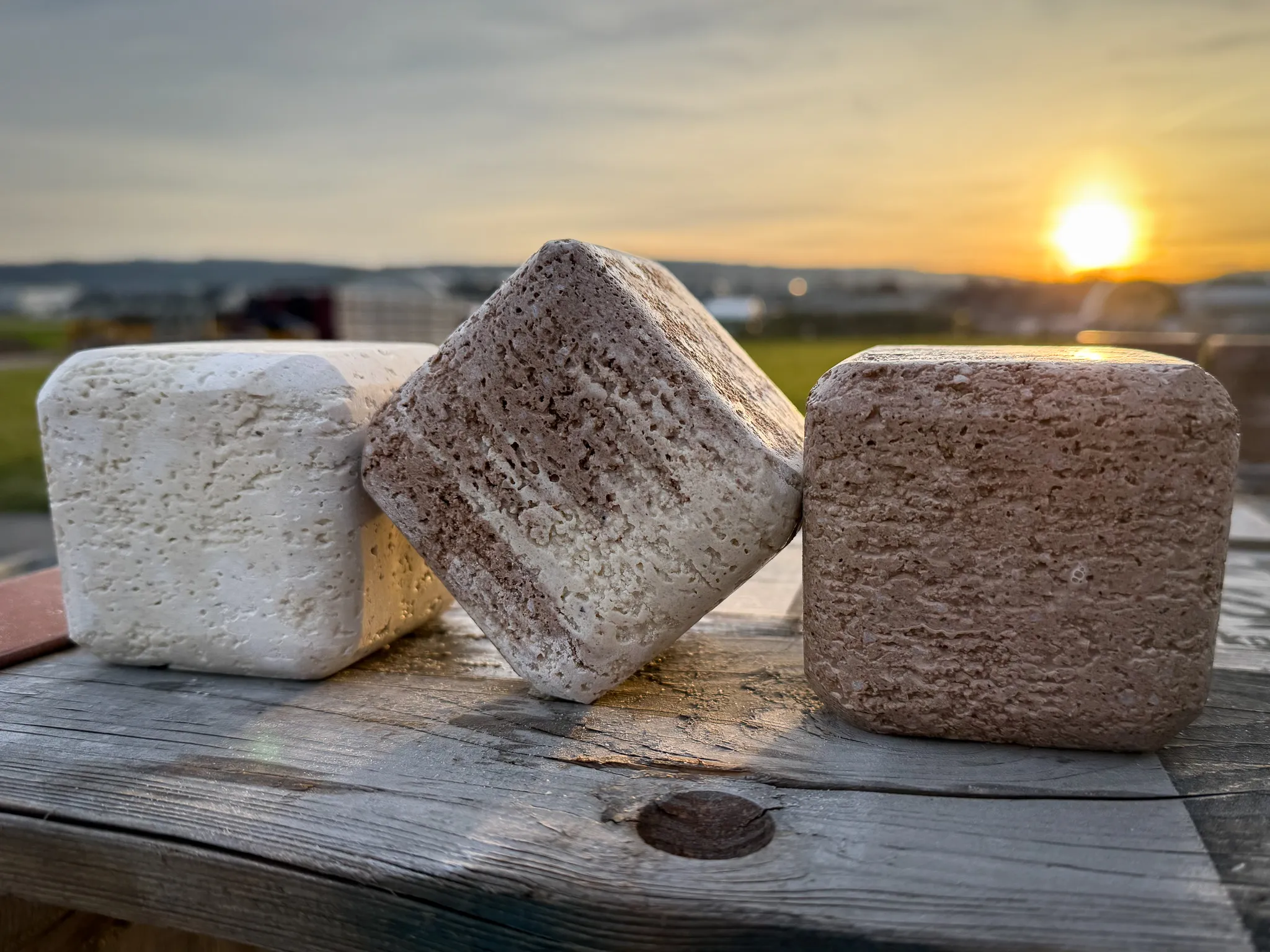
We develop our own geopolymer mixes from mineral residues to obtain the required performance, color and texture.
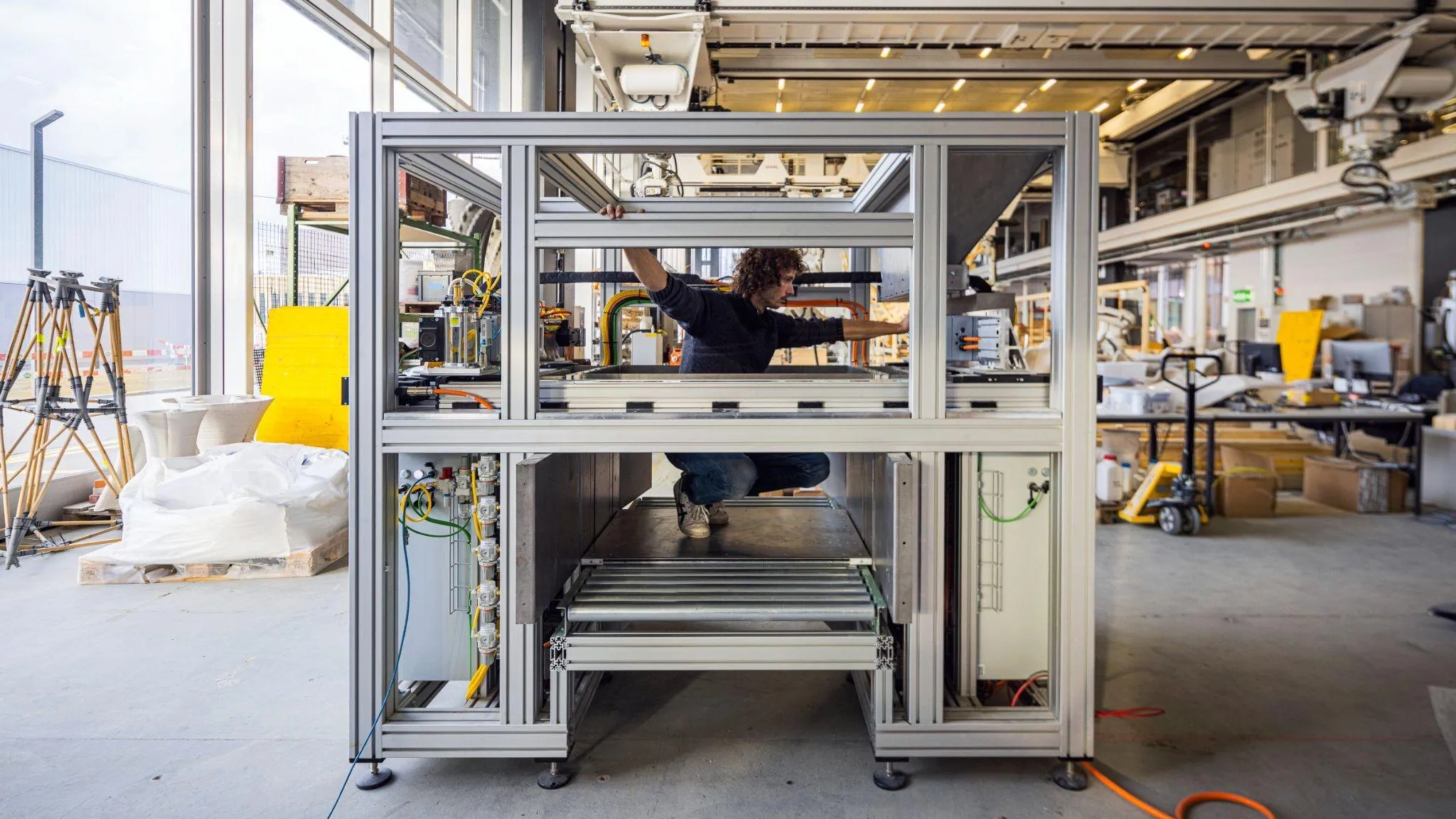
We control every step: from design, to material and hardware.
From concept to a model ready to print.
Binder jetting, layer by layer, in a bed of stone dust.
Robotic polishing and milling to tolerance.
Design
We control each aspect of the design-to-production journey.
The printhead jets a liquid activator into a powder bed made of recycled mineral aggregate, only where the part is.
Where the two meet, a geopolymer forms and binds the grains into stone. Layer by layer, the element grows inside the powder. Everything around it stays loose and goes back into the next print.
A thin layer of mineral powder is spread over the bed.
The printhead jets the activator only where the part is.
The geopolymer hardens at room temperature. No kiln, no autoclave, no cement.
The element is lifted out. Unbound powder goes back into the next print.
Proof
Finish
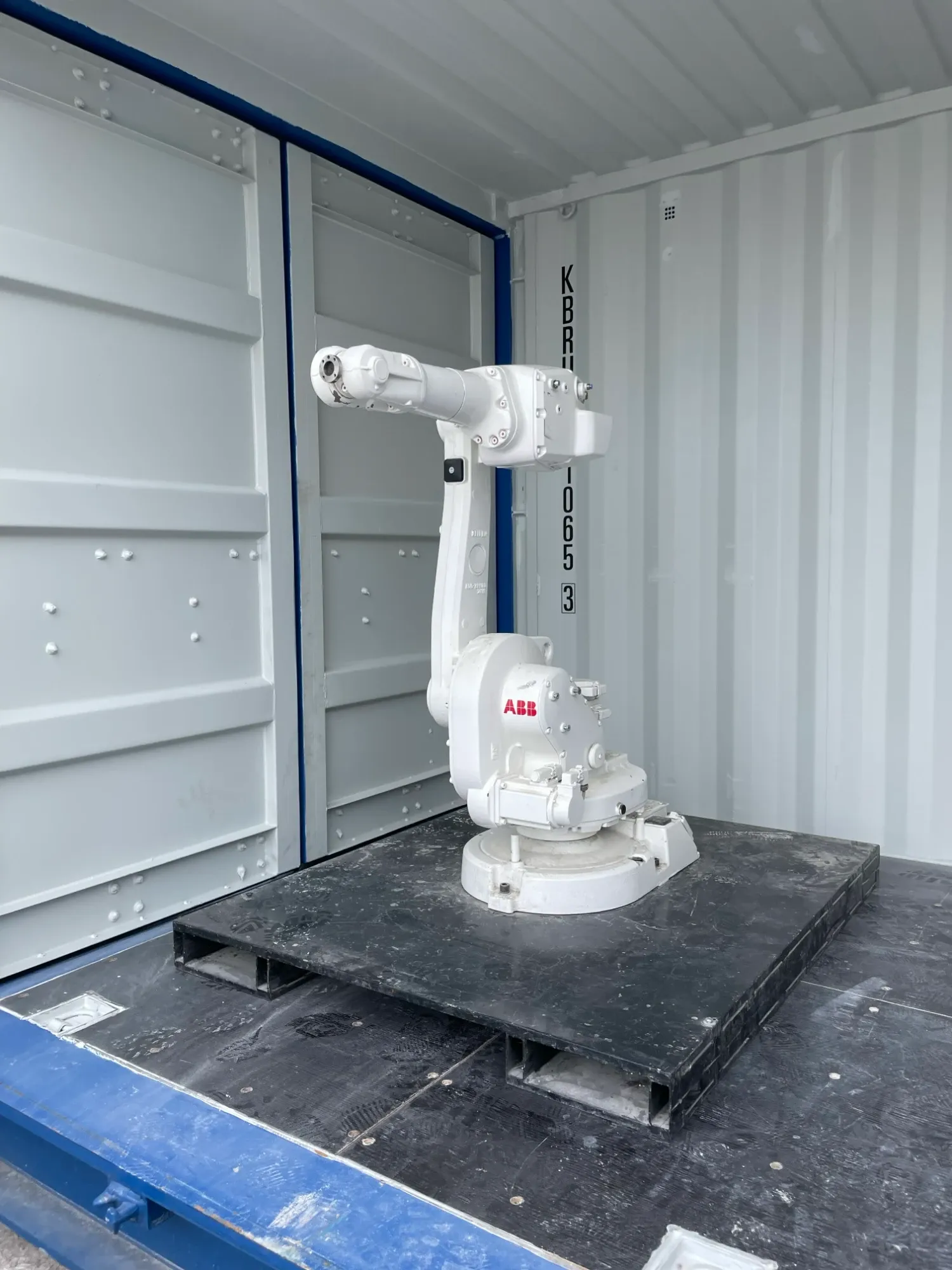
A robot arm finishes each element, following the same digital model it was printed from.
Surfaces are polished where the design asks for it, and the printed texture is kept where it doesn’t. Faces and joints are milled to tolerance, so elements fit together in assemblies.
The grain of the print, left as it is. Rough and matte, like split stone.
Even and matte, the layers softened.
Flat faces and sharp edges, cut to tolerance.
Smooth to the touch, the grains cut open.
A deep shine that brings out the colour of each grain.
Alternatives
Traditional methods and more recent printing processes each offer only part of the solution.
| Alternatives | Freedom | Precision | Performance | Economy | |||||
|---|---|---|---|---|---|---|---|---|---|
| Material | Form | Accuracy | Finishing | Strength | Outdoors | Fire | Sustainability | Cost | |
| 3DSP | Yes: Real mineral stone, with the grain, weight and feel of natural stone. | Yes: Any shape: undercuts, cavities, lattices. | Yes: Printed to the dimensions of the 3D model, piece after piece. | Yes: Crisp edges and a stone surface, ready to use or to finish. | Yes: Strong enough to carry loads, like natural stone. | Yes: Made for outdoors: it takes rain, frost and sun. | Yes: Mineral through and through: it does not burn. | Yes: Made from quarry and demolition residue, cured at room temperature, no cement. | Yes: Low-cost residue as raw material and no moulds, so even one-off pieces are affordable. |
| CNC-milled stone | Partly: It is natural stone, cut from a block. Composite stones require the block to be formed first. | Partly: The tool only reaches what it can see: no undercuts or hollow forms. | Yes: Milling machines cut to tight tolerances. | Yes: Fine detail and polished surfaces are possible. | Yes: As strong as the stone it is cut from. | Yes: Natural stone lasts outdoors for centuries. | Yes: Stone does not burn. | Partly: Needs quarried blocks, and much of each block is cut away. | No: Quarried blocks and hours of machining make every piece expensive. |
| Quartz-resin engineered stone | Partly: Crushed quartz in resin: stone-like, but uniform. | No: Comes only as flat slabs. | Yes: Slabs are cut to precise sizes. | Partly: Polished flat faces; edges can be shaped, but no relief. | Yes: Hard and strong, as a slab. | No: The resin fades and yellows in sunlight. | No: The resin binder can burn. | Partly: Some recycled content, but it relies on resin. | Partly: Standard slabs are affordable; custom shapes are not. |
| Concrete printing | No: Just concrete paste, not stone. | Partly: Layers stacked on top of each other: limited overhangs or cavities. | Partly: Extruded layers hold dimensions to the centimetre, not the millimetre. | No: Limited. Usually, the layers stay visible on the surface. | Yes: Concrete carries loads well. | Yes: Made for outdoor building. | Yes: Concrete does not burn. | Partly: Can take some recycled aggregate, but relies on cement. | Partly: Fast printing, for large elements, but high cement content. |
| Resin-bound sand printing | No: Sand held together by resin: it looks and feels synthetic. | Yes: Prints any shape in a bed of sand. | Yes: Precise, as it is made for foundry moulds. | Partly: Sharp shapes, but a sandy surface that needs a coating. | Partly: Strong enough for moulds and indoor pieces, not for loads. | No: The resin ages in sun and weather. | No: The resin binder burns. | No: Uses new sand and a petroleum-based resin. | No: The resin and new sand make large parts expensive. |
| Selective Cement Activation (SCA) | Partly: Cement-looking elements, not the texture of stone. | Yes: Prints any shape, like other powder-bed printing. | Yes: Fine powder allows precise dimensions. | Partly: Fine powder gives a smooth surface and sharp detail. | Yes: Suited to carrying loads. | Yes: Like concrete, it can be used outdoors. | Yes: Mineral, so it does not burn. | No: Needs fine, processed powder, not raw residue, and uses cement. | Partly: Cheap sand and cement, but costly machines and long curing. |
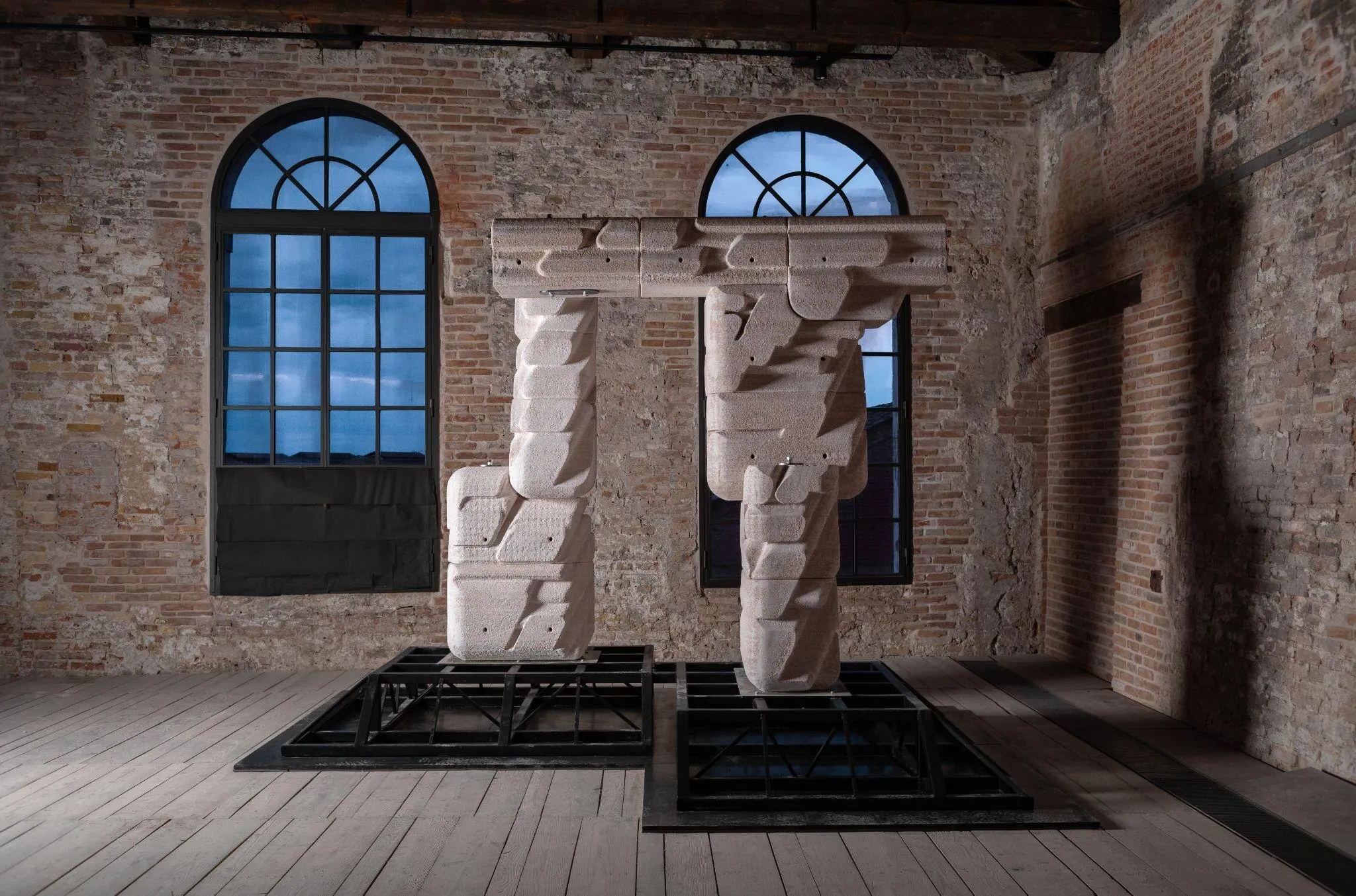 Anti-RuinVenice, Biennale Architettura · 2025A post-tensioned portal of printed elements, dry-stacked without mortar, at the Venice Biennale.
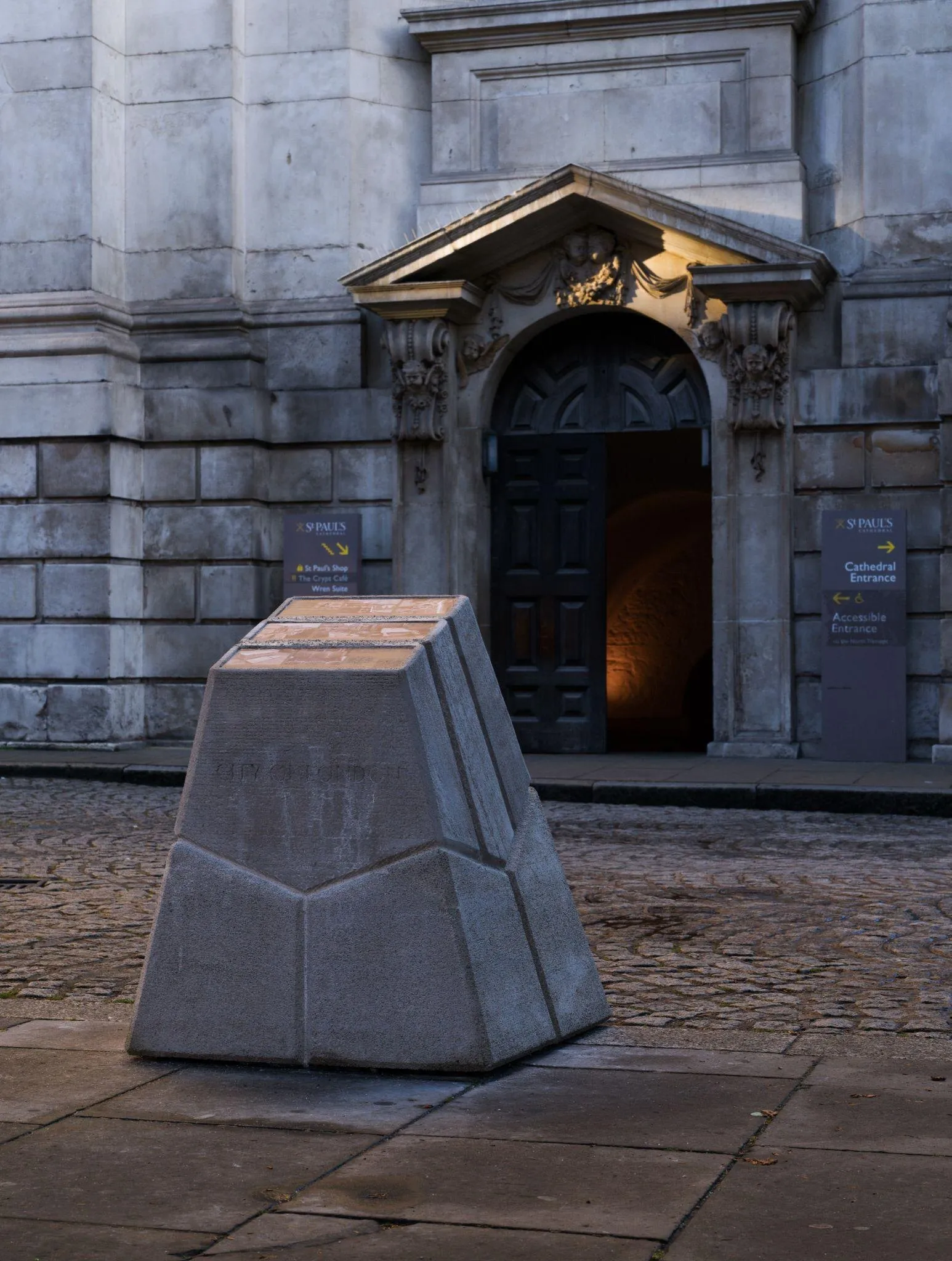
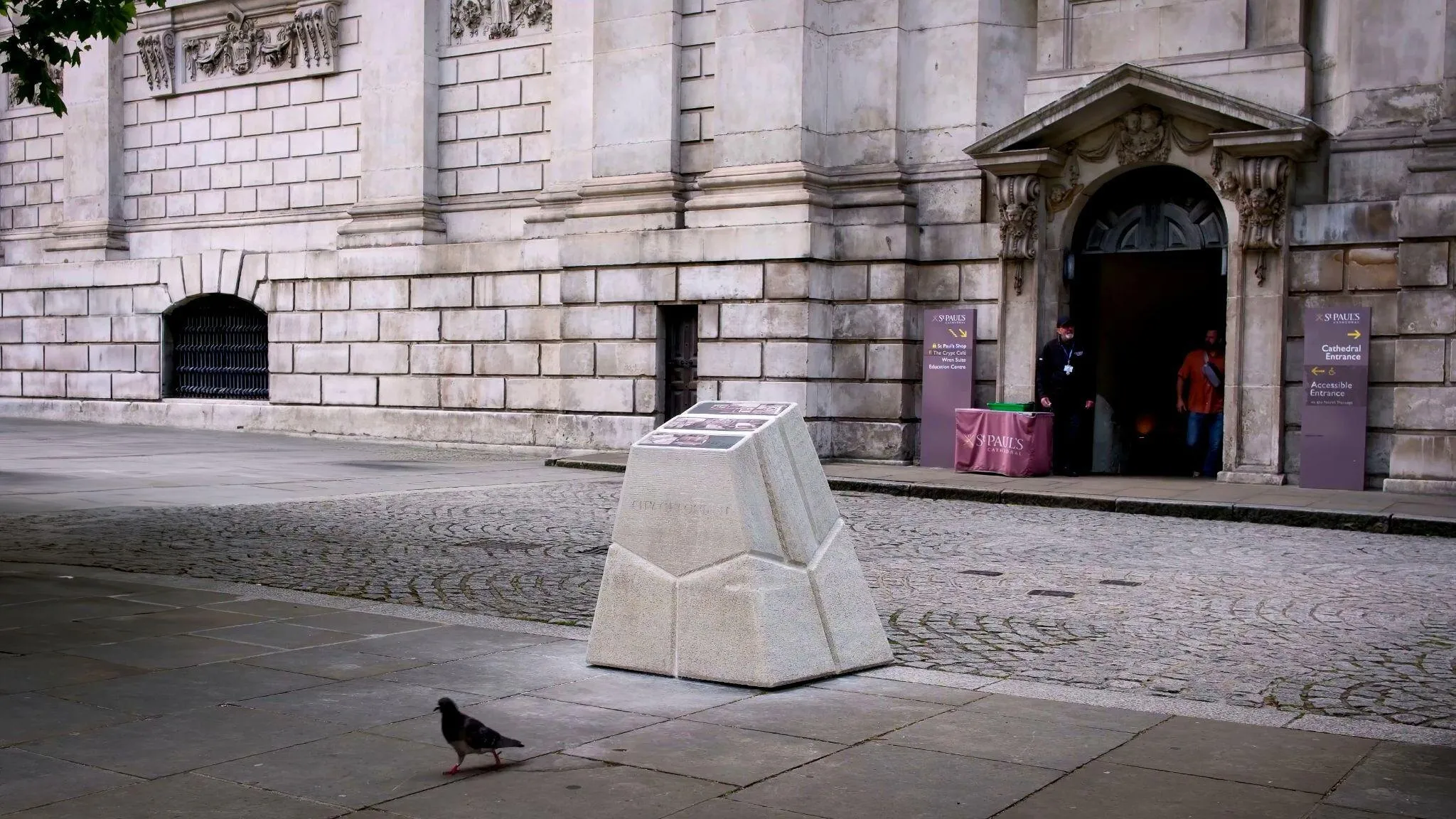 From Thames to EternityLondon, St Paul’s Cathedral · 2026
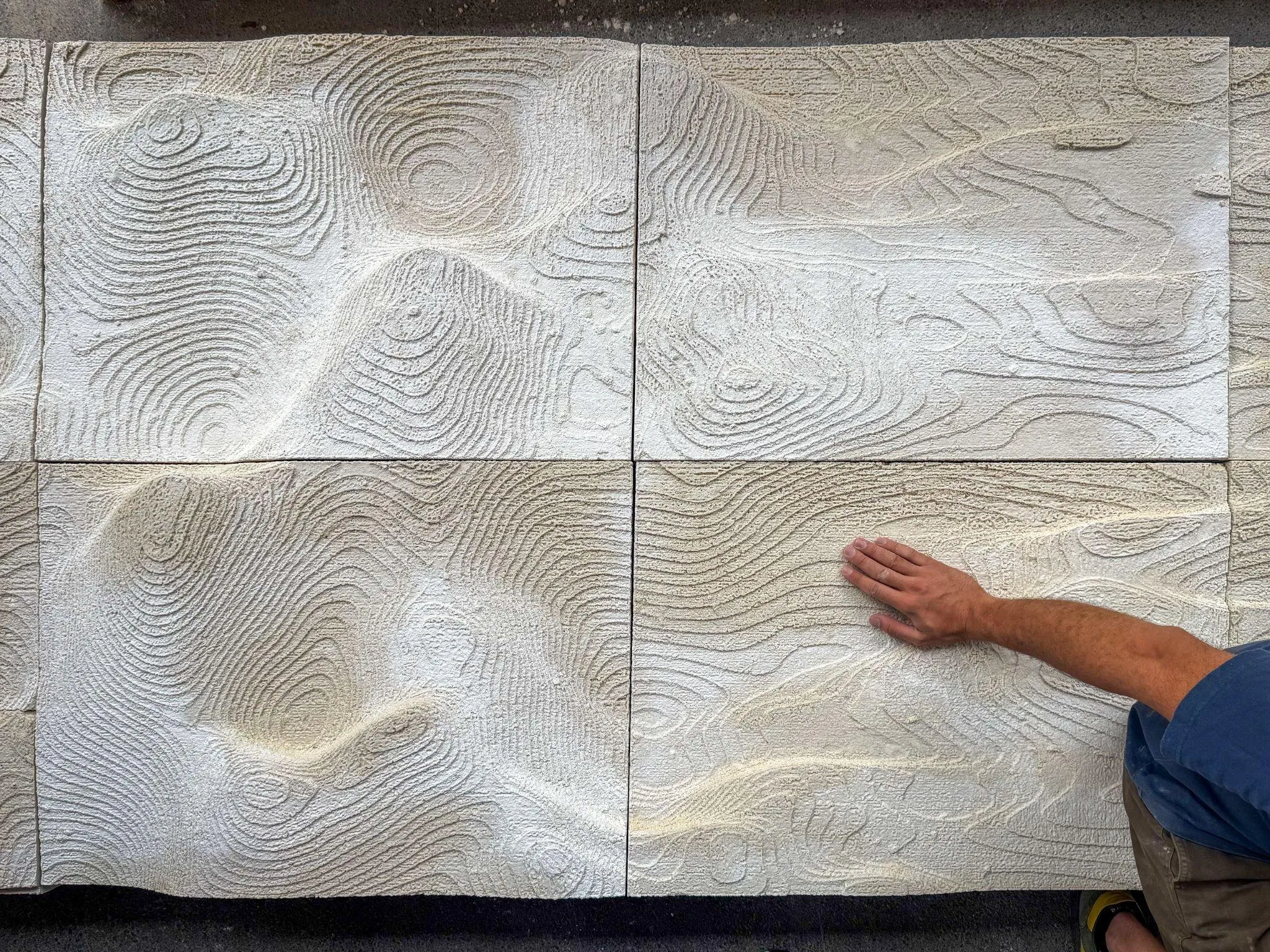 StoneXNew Delhi, India · 2026
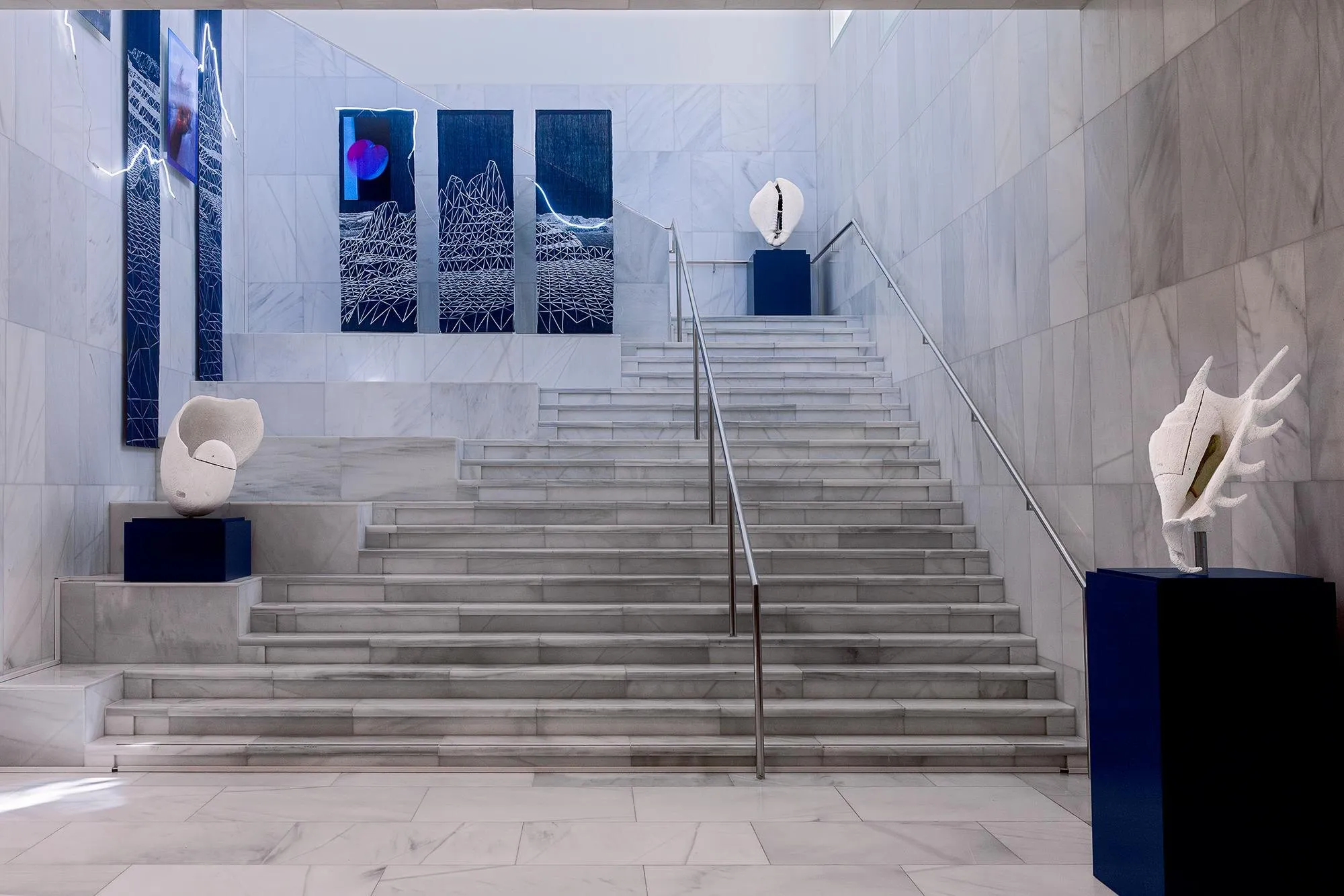 1,311 DiamondsApeldoorn, Paleis Het Loo · 2026
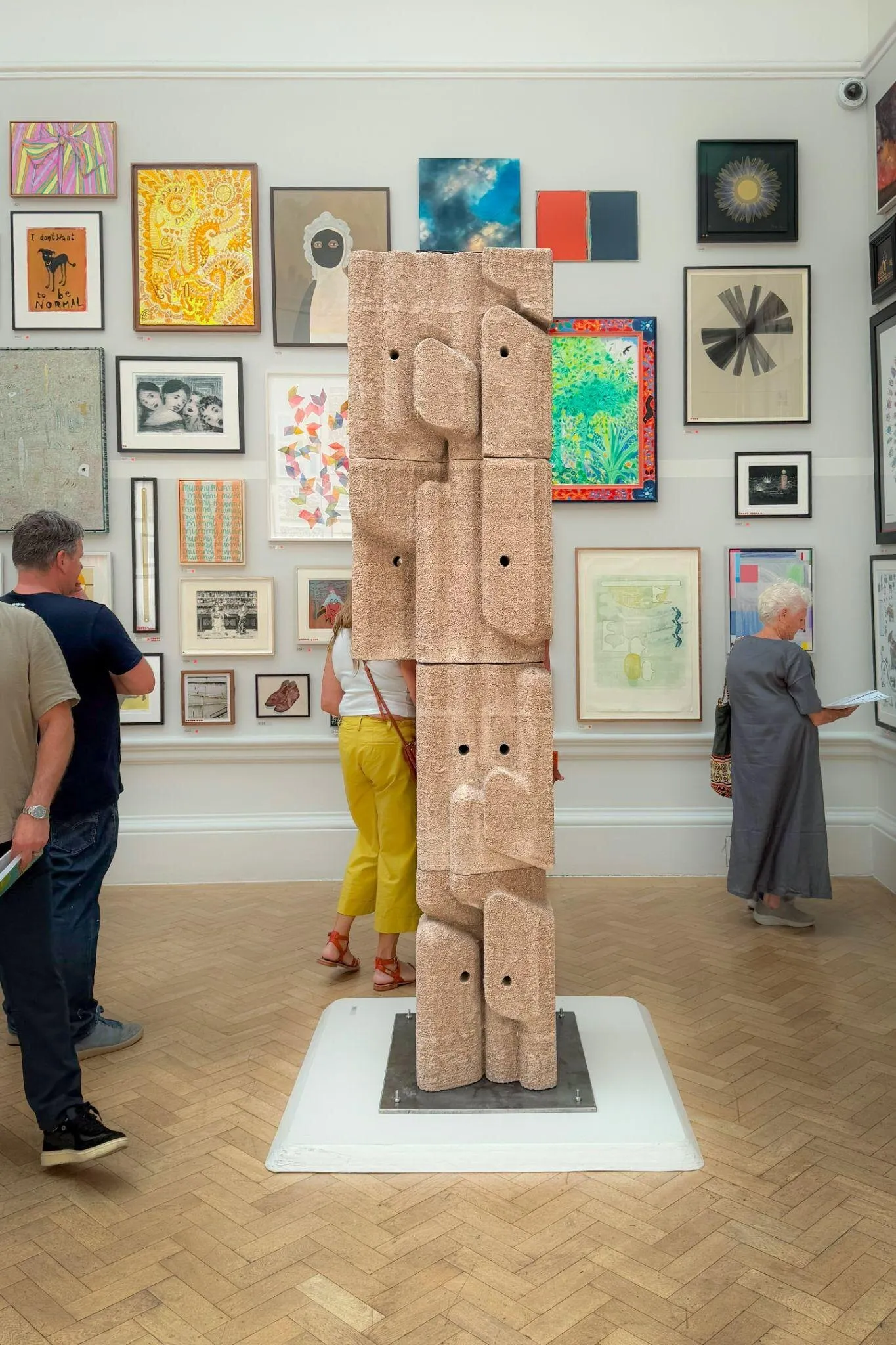 Anti-Ruin, Phase 2London, Royal Academy of Arts · 2026
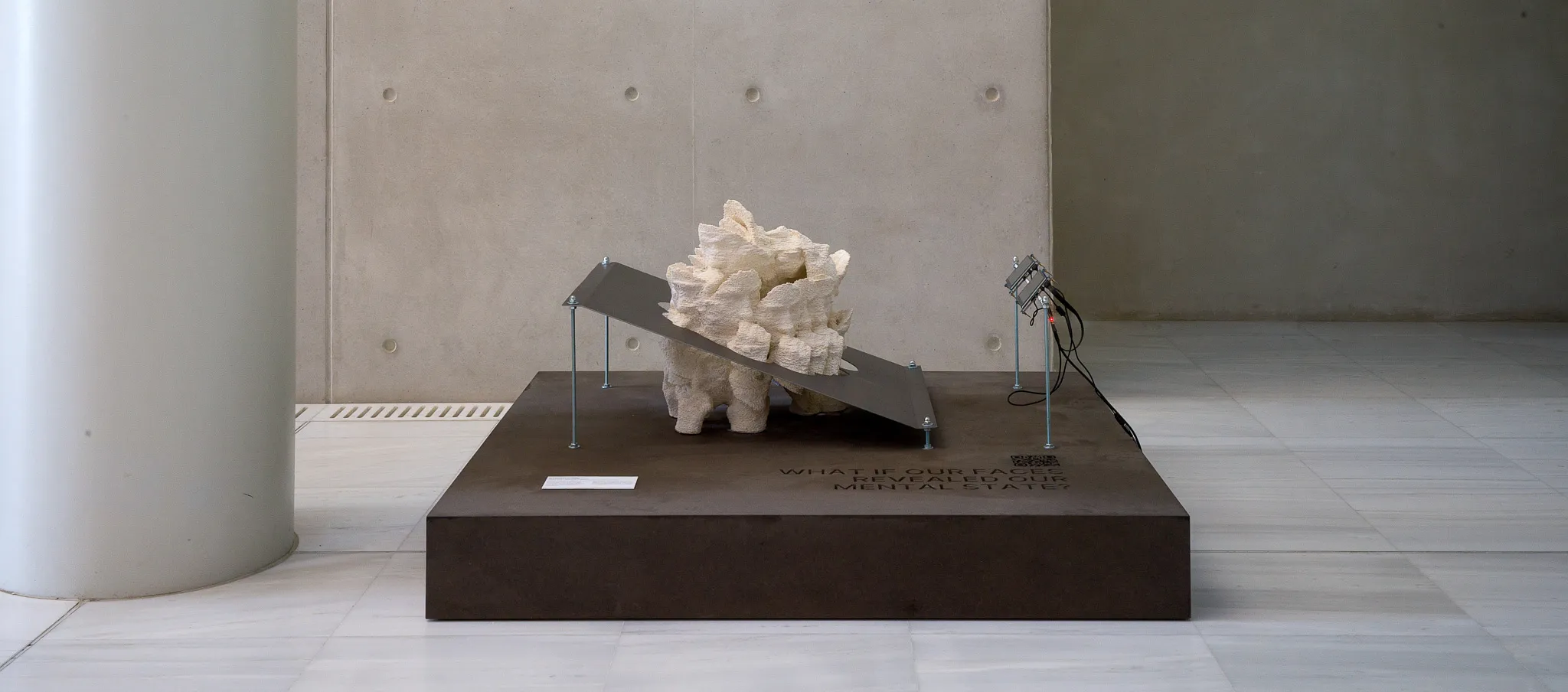 Artefacts of the FutureAthens, Stavros Niarchos Foundation · 2026
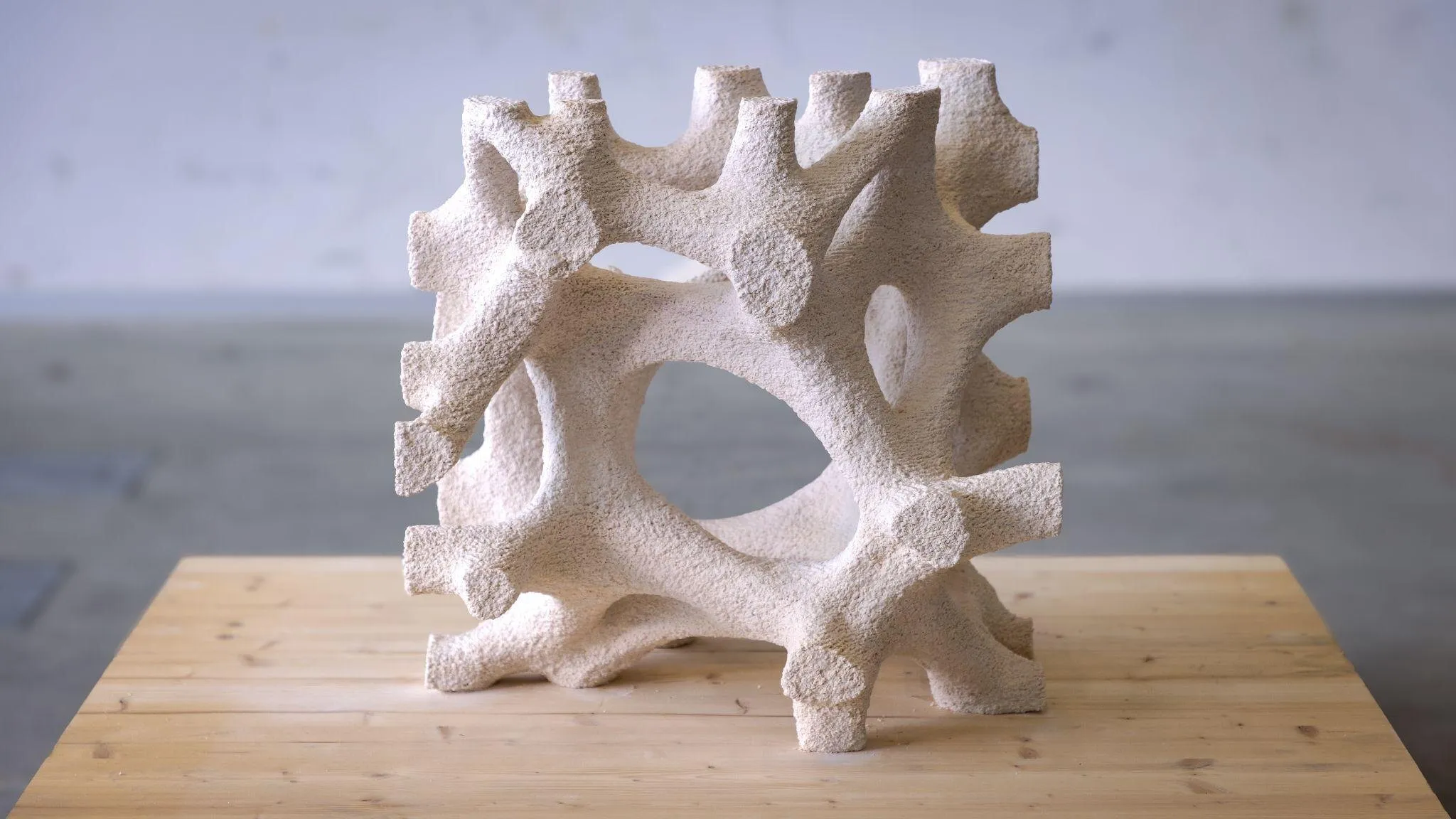 Ceci n’est pas un fossileVerona, Marmomac · 2024
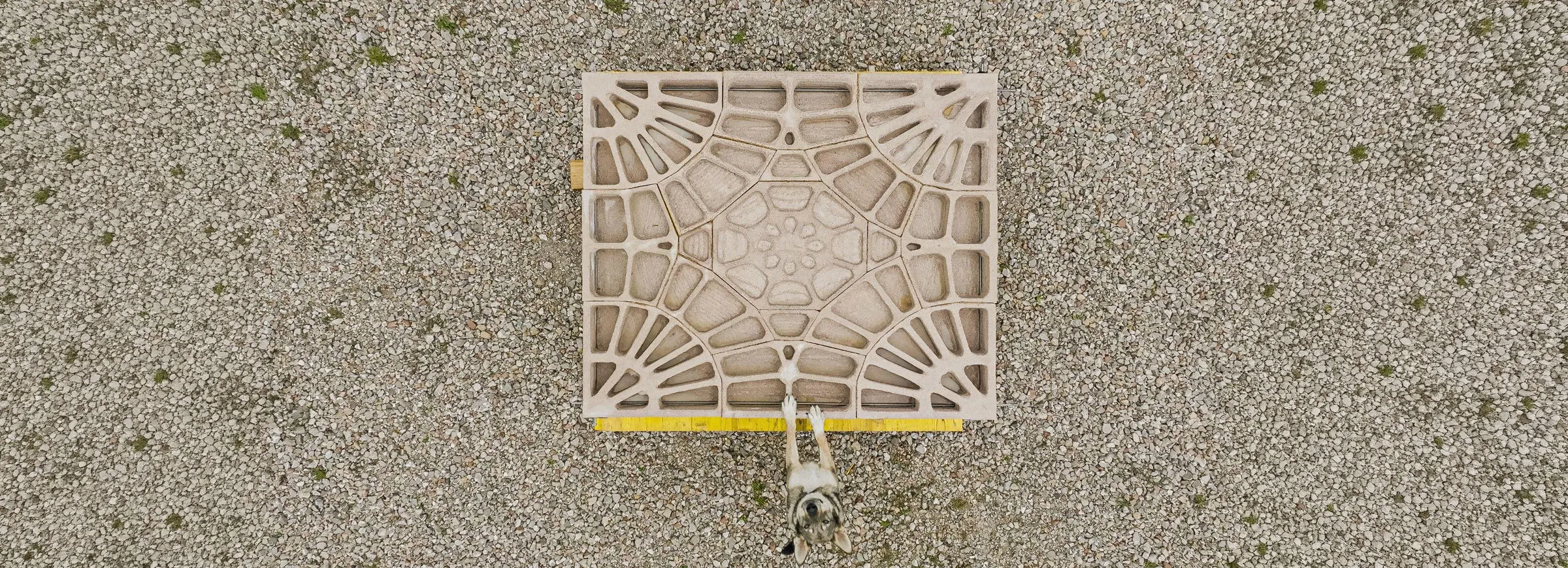 Arzo – Funicular floor prototypeArzo, Ticino · Palazzo Mora, Venice · 2023
Read more
Materials, hardware and software, all developed in-house. The materials set the recipe, the hardware shapes the stone, and the software controls every step.
We develop our own geopolymer mixes from mineral residues to obtain the required performance, color and texture.
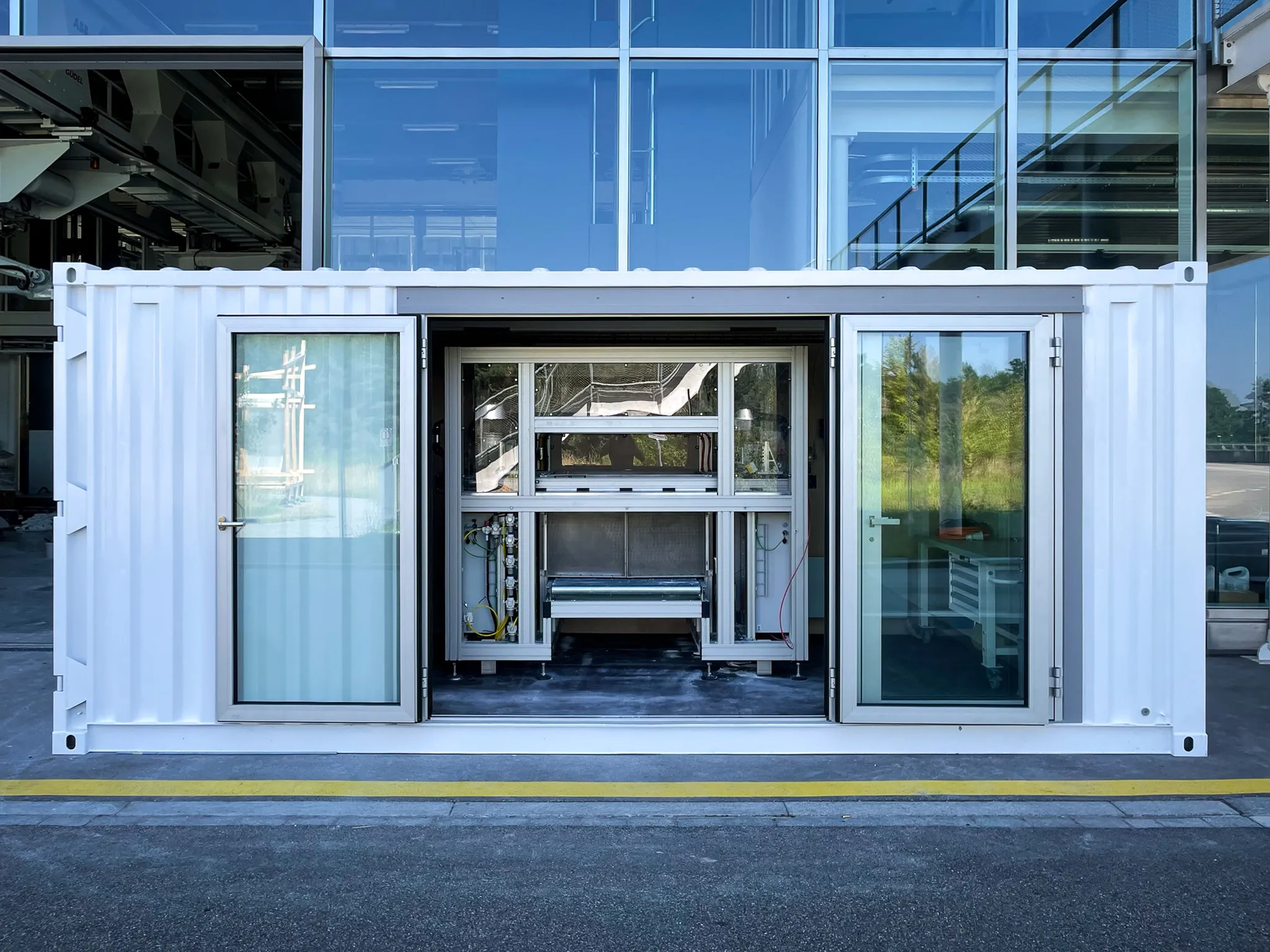
Geopolymer binder jetting and robotic polishing, on machines we design and build ourselves.
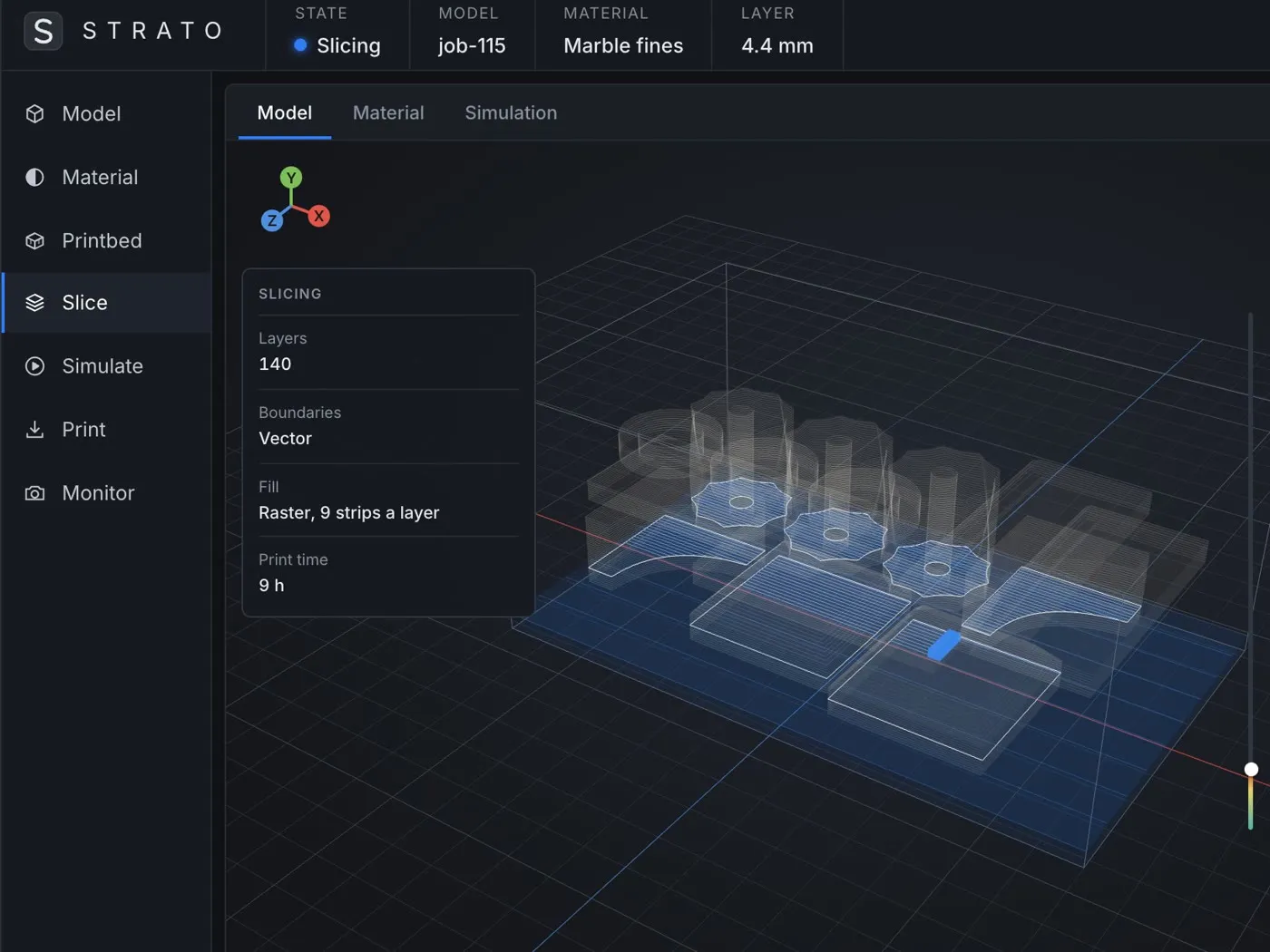
Our own tools, end to end: slicer, mix designer, print and robot controller, and computer vision.
We reply within a few working days.
Cookies
We’d like to use cookies to see how the site is used and to record visits, so we can improve it. What you type in forms is never recorded. Without cookies we only count page views. Privacy