Space exploration
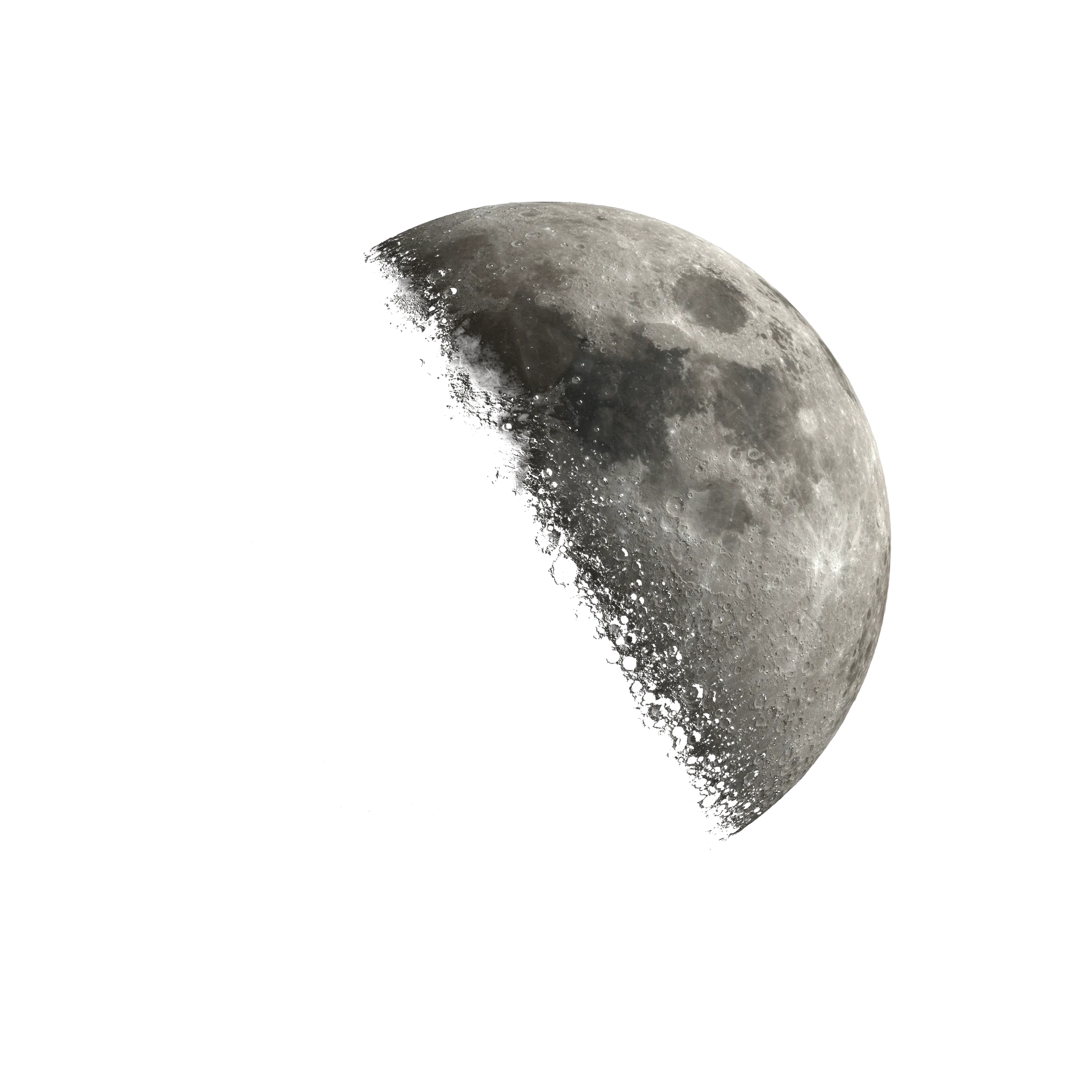
Building on the Moon, with the Moon.
Everything launched from Earth is expensive. Lunar regolith, the loose mineral soil covering the Moon, is already there. Printing it into stone elements would let missions build with the ground they land on.
Lunar regolith
A powder that covers a world
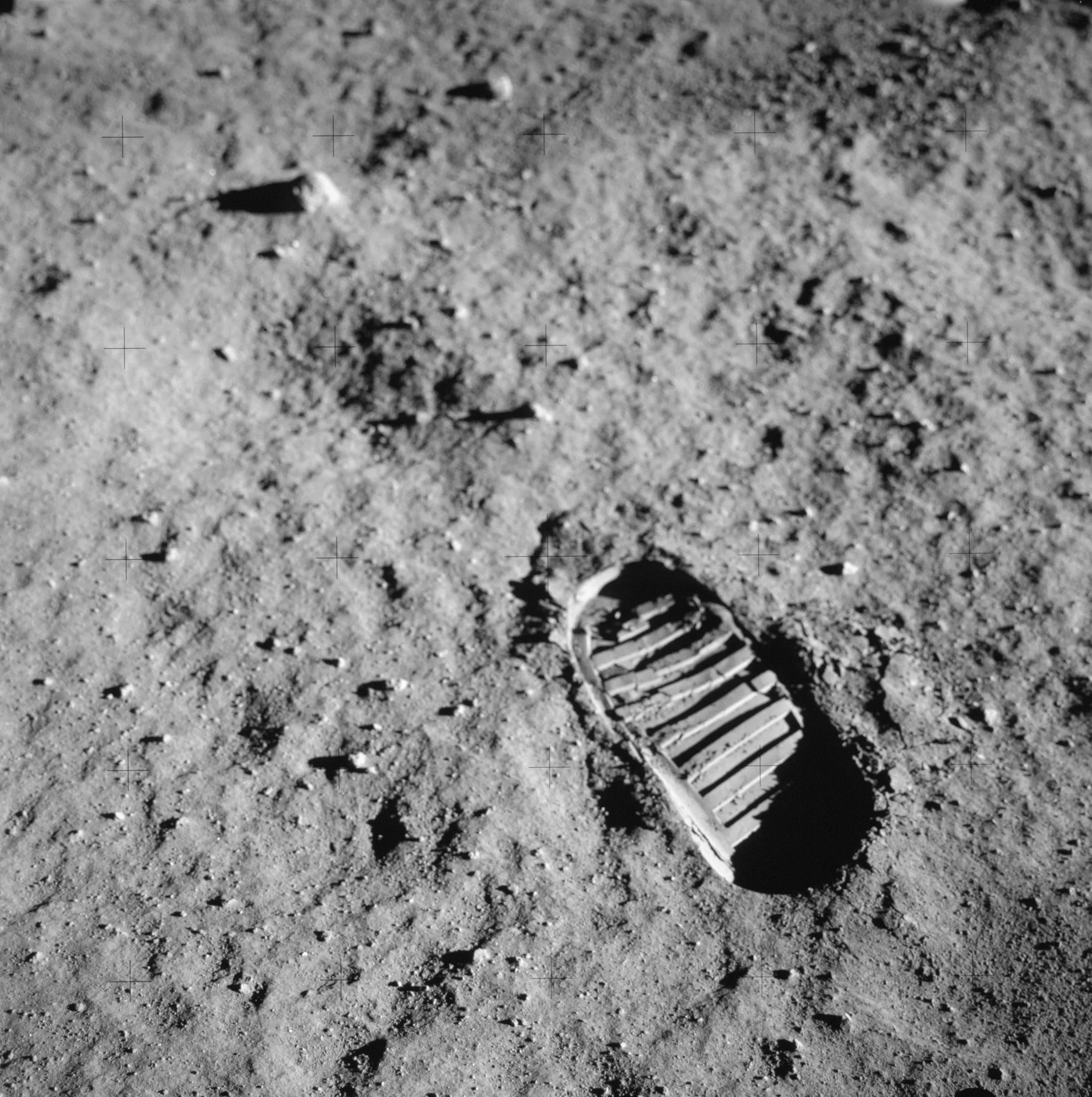
Regolith is the layer of loose rock fragments and fine mineral dust that covers the Moon’s surface, produced over billions of years by meteorite impacts. It is there wherever a mission lands.
Building with it, instead of shipping construction material from Earth, is one of the central ideas of in-situ resource utilisation: use what is there, and launch only the machine.
 © NASA
Why geopolymers
A binder the Moon can supply
Cement needs limestone, kilns and plenty of water, which a lunar base can’t count on. Geopolymers form when aluminosilicate minerals react in an alkaline solution, and lunar regolith is rich in exactly those minerals.
- 01
Made from regolith
Regolith supplies the aluminium and silicon a geopolymer needs. Studies on lunar simulants find highland regolith the most suitable.
- 02
Water carries, it doesn’t build
In cement, water becomes part of the hardened structure. In a geopolymer it mainly carries the reaction and stays bound as hydroxyl groups, which is why geopolymers are expected to cope better with the lunar vacuum.
- 03
Water is already there
Samples returned by the Chang’e-5 mission suggest lunar soil holds up to 2.7 × 10¹⁴ kg of water from the solar wind, bound in glass beads, besides the ice at the poles. Davidovits points out that this bound water can be released by moderate heating, around 200–250 °C.
- 04
Mineral and strong
Geopolymers are mineral, ceramic-like binders. Ours reached 37 MPa mean compressive strength on Earth, in an independent accredited test.
Based on Joseph Davidovits, “Geopolymer solutions for lunar / Martian habitats and space works”, Geopolymer Camp 2024, and reviews of lunar regolith geopolymer research.
Watch the talk ↗Why our process
Made for loose mineral grains
- 01
A powder bed is what regolith already is
We print by spreading thin layers of loose mineral grains and binding them only where the part is.
- 02
Coarse grains, large nozzles
Our printhead is designed for coarse, irregular powders, not the fine, uniform powders industrial printers need.
- 03
No furnace
The grains are bound chemically, without firing or sintering in a furnace.
- 04
Nothing wasted
Unbound powder goes straight back into the next layer, which matters where every input counts.
- 05
Assembled dry
Elements are stacked and post-tensioned without mortar, and can be taken apart and rebuilt.
How it would work
From soil to structure
- 01
Collect
Excavate and sieve the regolith around the site.
- 02
Print
Spread a layer, jet the binder only where the element is, and repeat.
- 03
Recover
Lift the elements out. The loose regolith goes back into the bed.
- 04
Assemble
Join the elements dry into the structures a base needs.
What it could build
- Landing pads
- Shielding walls
- Shelters
- Paths and roads
Open questions
What we still need to solve
The binder
Our binder uses a liquid activator. Water exists on the Moon, as ice and bound in the soil, but extracting it costs energy, and studies show that vacuum and temperature cycling can reduce the strength of regolith geopolymers. The chemistry has to be adapted and tested.
The material
Regolith differs from site to site. Mixes have to be developed and tested on lunar regolith simulants.
Autonomy
Printing far from people means the process has to run remotely, with little maintenance.
Mass and energy
The printing unit has to be light enough to launch and frugal enough to power.

Working on lunar surface infrastructure?
We are looking for partners in the space sector, from agencies and research groups to companies. We reply within a few working days.