Marine habitats
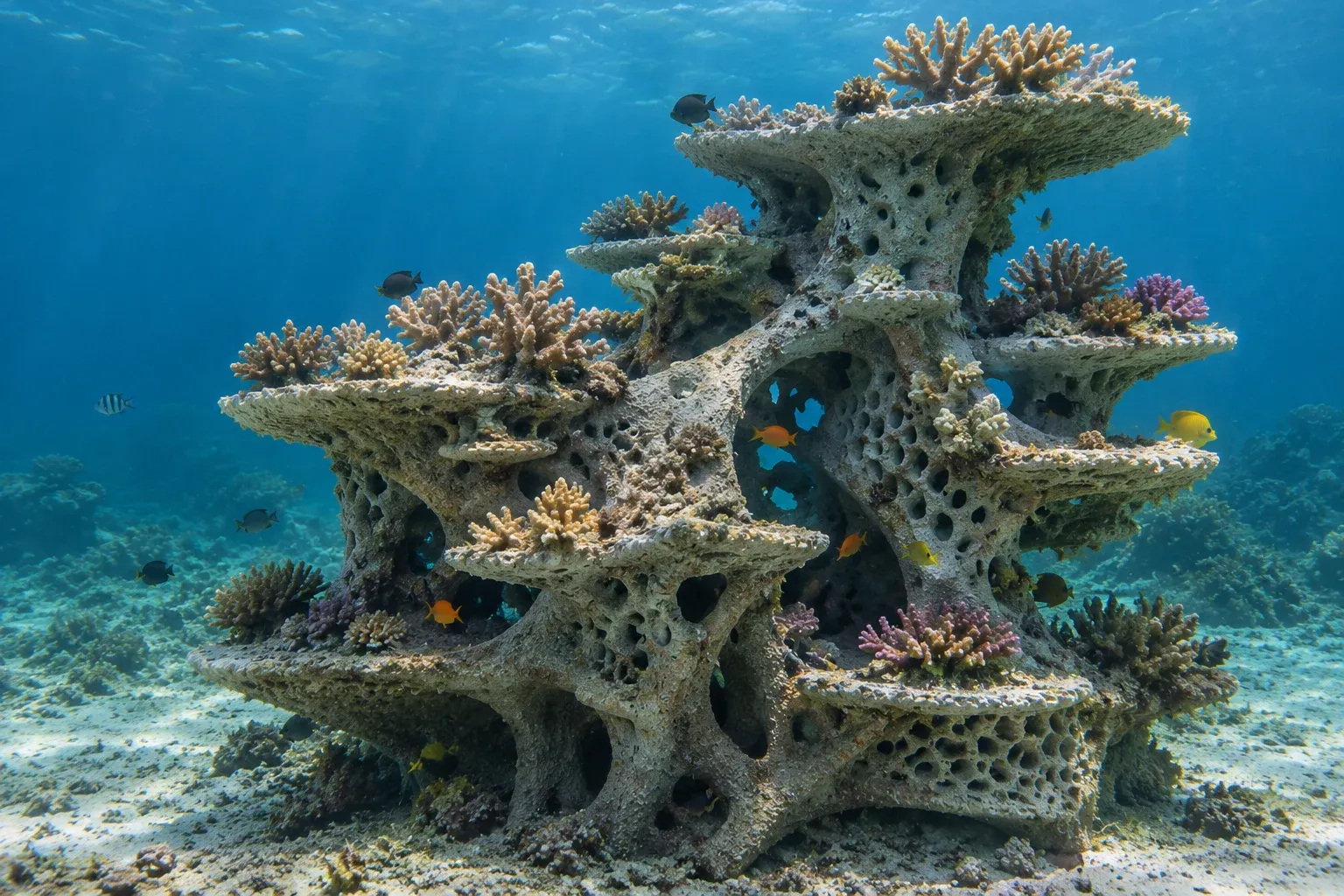
Stone for the seabed
Reefs are made of holes, ledges and rough surfaces, the places where fish shelter and corals, oysters and algae settle. Printing builds exactly that kind of shape, in quick an inexpensive way.
The need
Reefs need rebuilding
Coral reefs, oyster beds and rocky habitats are disappearing, from warming seas, pollution, dredging and storms.
Bringing them back is a growing field. Marine biologists, restoration organisations, research groups and coastal engineers place artificial structures on the seabed for life to settle on, from reef modules and coral nurseries to habitat panels on sea walls.
They need these structures in large numbers, shaped for the species they should host, made of materials that belong in the sea, and made close to where they go in.
Reef modules
A module that becomes a reef
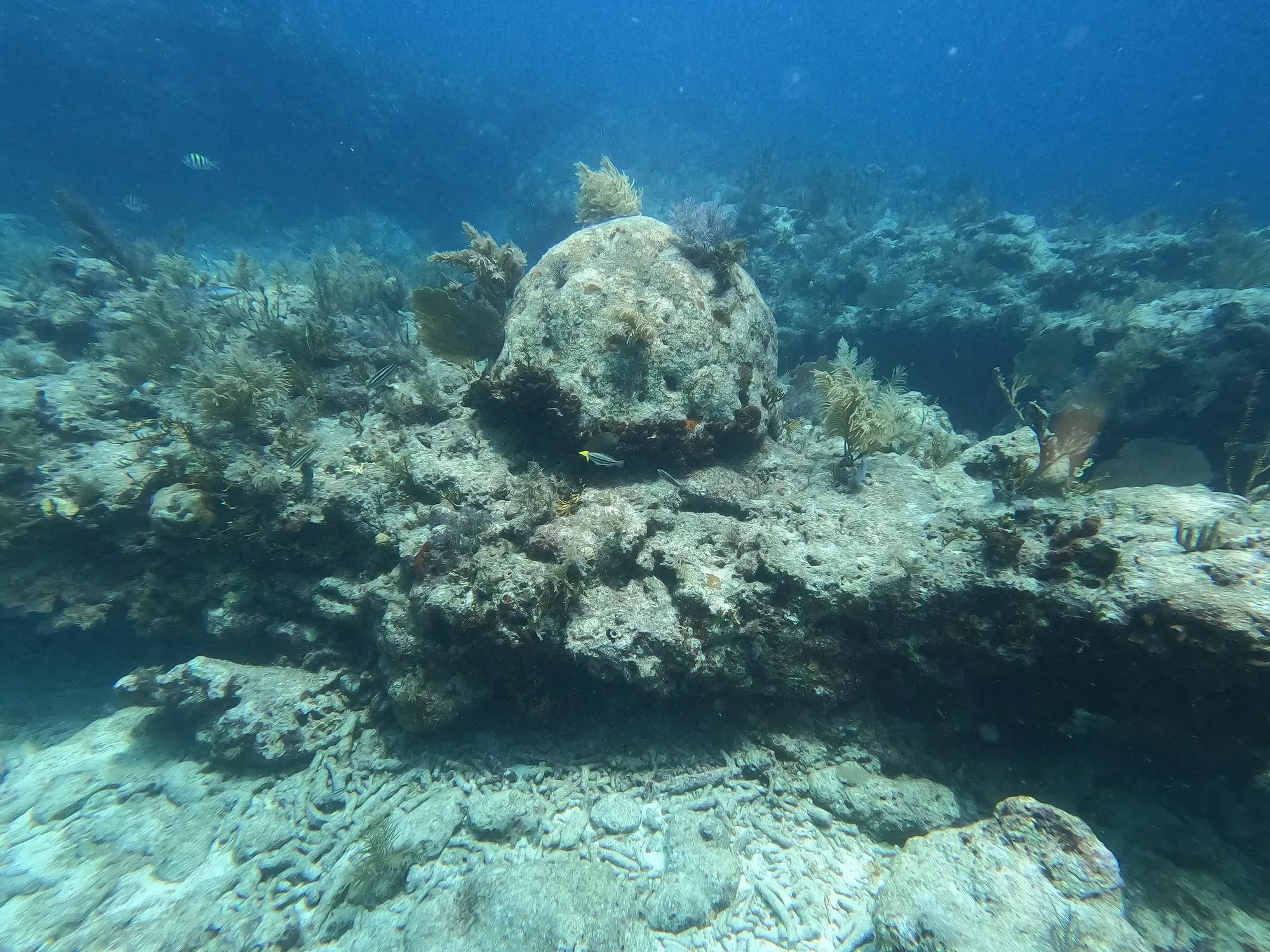
Stackable stone modules full of tunnels, ledges and cavities of every size, placed on the seabed as the start of a reef.
- small · juveniles, crabs
- medium · small reef fish
- large · groupers, lobsters
- peg, on the module below
- socket, in the module above
- module outline
Room for every species
Small holes for small fish, larger caves for larger ones, all in one module.
Built up from parts
Modules are stacked and joined without mortar, so a reef grows from elements that ship on a pallet.
Heavy enough to stay
Weight and footprint designed so a module stays in place on the seabed.
Rough by nature
The printed surface has the grain of the sand it is made from, for larvae to settle on.
Local sand
Printed from the mineral resources closest to the coast, tested before production.
No Portland cement
Mineral aggregate bound by a geopolymer, with no resin and no plastic.
Tourism
Reefs people come to see
Every module can be designed, so a reef can be habitat and a place visitors travel to, at the same time.
Dive and snorkel sites
Designed reefs give divers and snorkellers somewhere new to go, close to the shore.
Less pressure on natural reefs
Visitors spread out to the new reef instead of crowding the reefs that need protecting.
Designed with artists
No mould, so every module can be a different shape, drawn with designers and artists.
Partners
Who we are looking for
We bring the printing and the material. We are looking for the people who know the sea.
Marine biologists
To design the cavities and surfaces for the species a reef should host, and to measure what settles.
Research groups
To run pilots and monitor modules on the seabed over the years.
Coastal engineers
To size modules for waves, currents and the seabed they stand on.
Authorities
To choose sites and guide the permits that anything placed in the sea needs.
Hospitality
Hotels, dive centres and tourism boards, to fund and host reefs that visitors come to see.
Working on marine restoration?
Tell us about your project or your site. We reply within a few working days.